
The Next Stop
A next-generation mobility touchpoint for HVV, unveiled at UITP 2025 — a vision for how the everyday point of contact with public transport could work when it is designed as one integrated object.
The bus stop, as a form, hasn't structurally changed in fifty years. A pole, a sign, a roof if you're lucky. In the meantime, the touchpoint has quietly become multi-modal: alongside the bus, passengers now connect to rental bikes, ride-hailing, shared rides, MOIA, and onward transit. Around the stop, cameras, real-time displays, accessibility provisions and journey planners have been added over time — each as a separate object, each on its own procurement cycle, none of them designed to be there together.
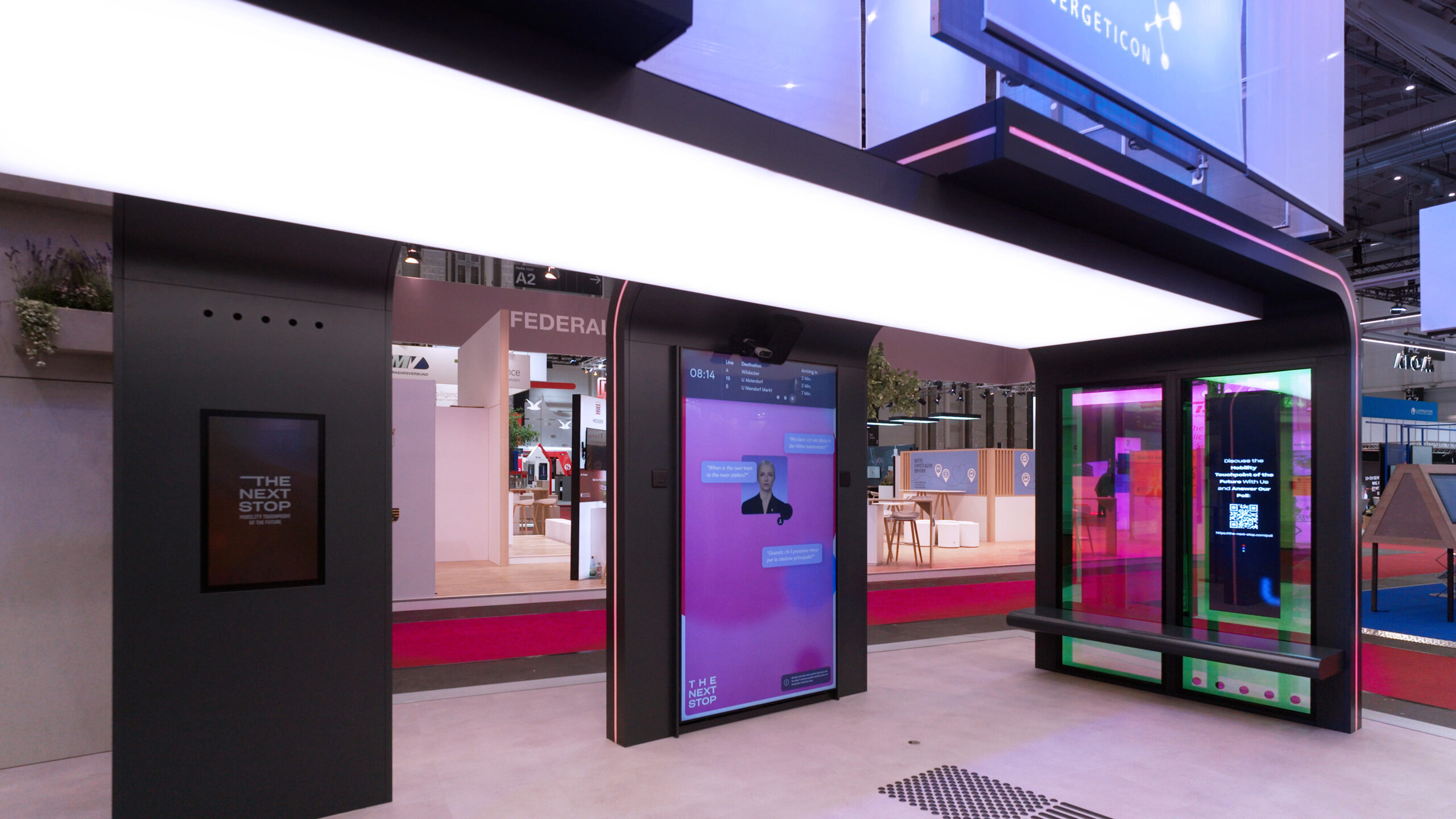
HVV's brief was to ask the question forward: if the touchpoint were designed once, today, as a single object integrating all of that, what would it contain? The Next Stop is the answer — a vision project to advance the topic of the mobility touchpoint, developed inside the procurement reality where media operators run this kind of infrastructure on behalf of cities.
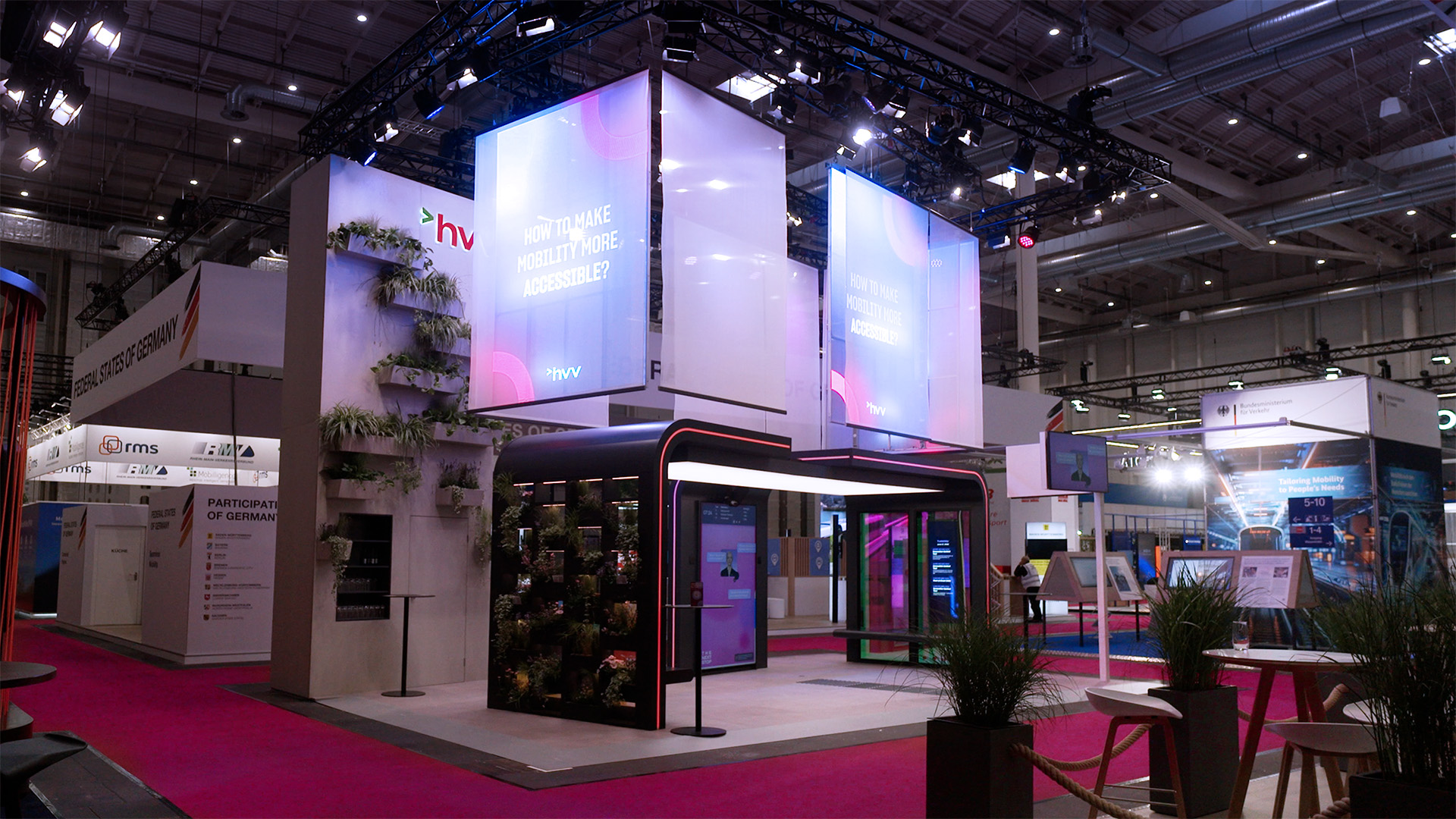
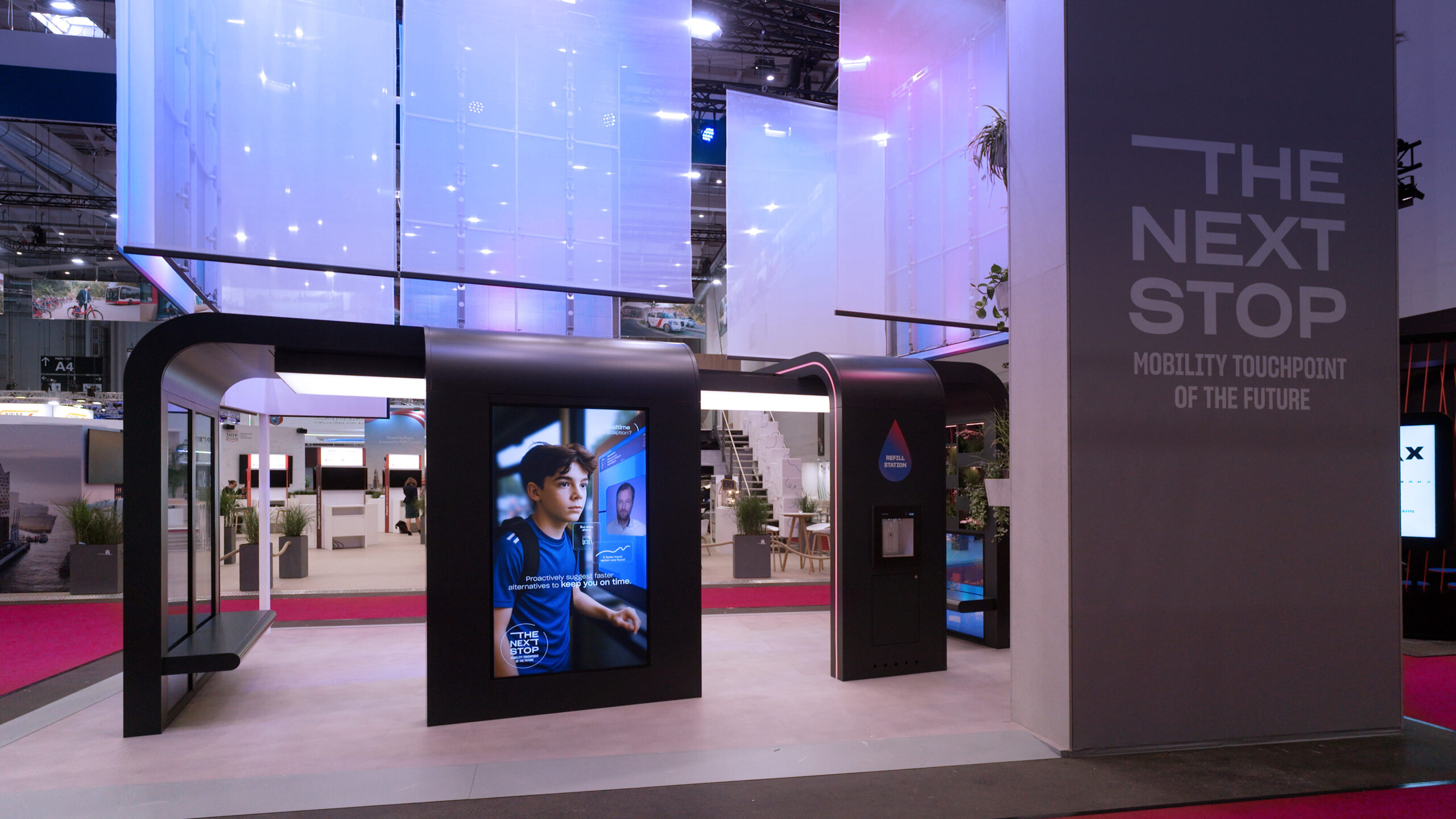
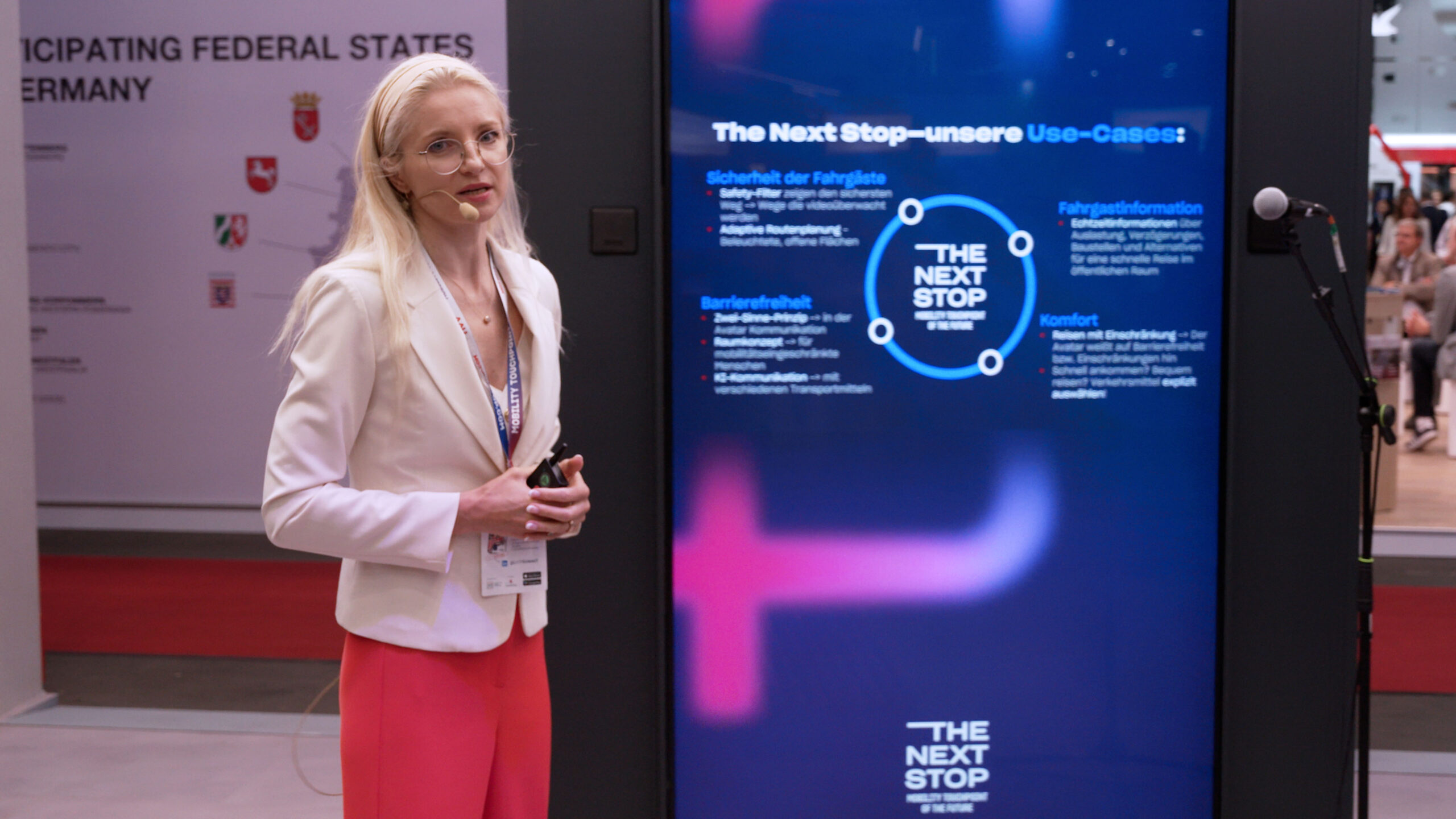
The Next Stop consolidates what is currently scattered across separate objects on the street. Shelter from weather and from physical exposure. Real-time security awareness — analysis built into the structure rather than bolted onto it. Wayfinding and journey information delivered visually for passengers who can read it, and conversationally through an AI avatar for those who can't or who don't speak the local language. A water dispenser, because waiting in heat is part of the real experience of urban transit. Each function is there because a real passenger need was named.
The AI avatar handles the linguistic and accessibility problem in one move. It speaks 27 languages, which means a tourist arriving in a city without local knowledge, a recent resident still learning the language, and an elderly user uncomfortable with screen interfaces can all use the same touchpoint with the same expectation of being understood. The avatar suggests routes rather than presenting timetables — the question a passenger actually asks ("how do I get to X from here") replaces the question a system usually answers ("when does line 4 arrive"). Behind the conversation, the AI is governed: it stays inside verified mobility knowledge, so the answer a passenger acts on is the answer the transit network would give.
The harder design challenge was holding all of that inside a single object that still reads as a place to catch a bus. Adding functions to street infrastructure usually adds clutter; the absorption logic only works if the result feels less complicated than what it replaces, not more. The form had to look like the future of an existing thing rather than a new category — recognisable enough that someone running for the bus doesn't have to think about it, considered enough that someone waiting starts to notice what it does.
The full delivery — concept through industrialisation — ran in six months. The companion process is documented separately; here the relevant point is that the timeline didn't compromise the product. Every function visible in the UITP unit is engineered for street-scale deployment.
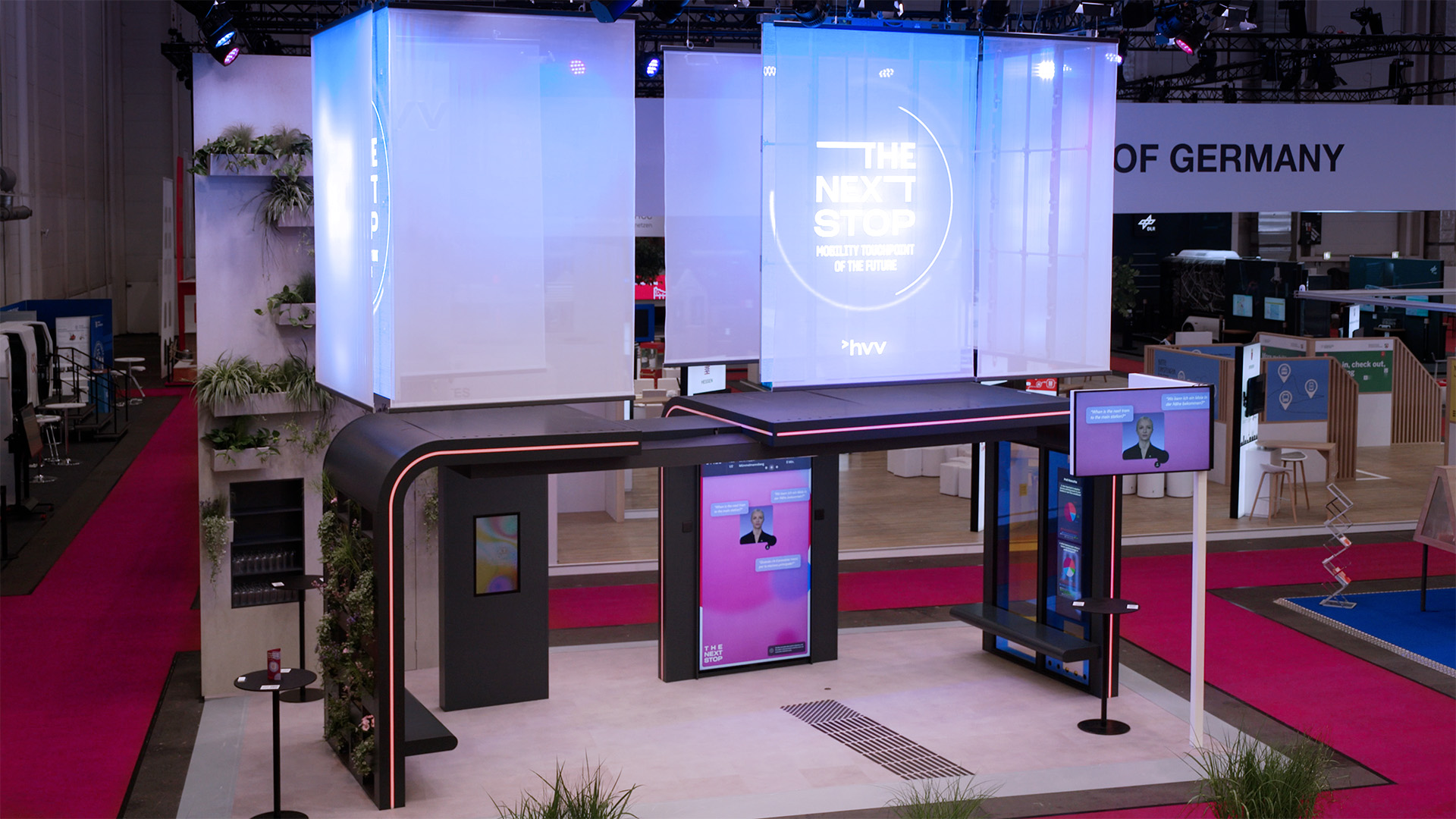
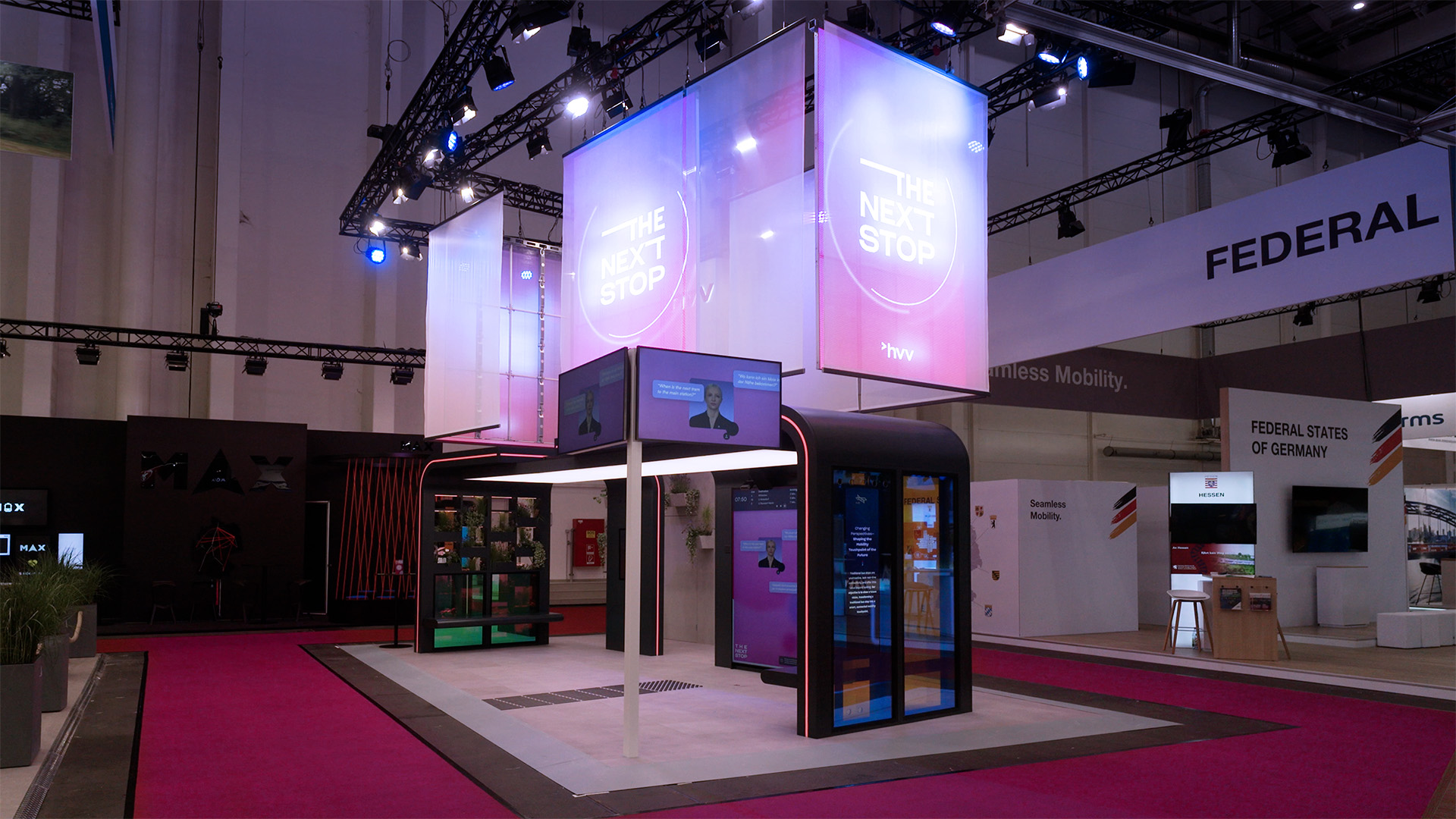
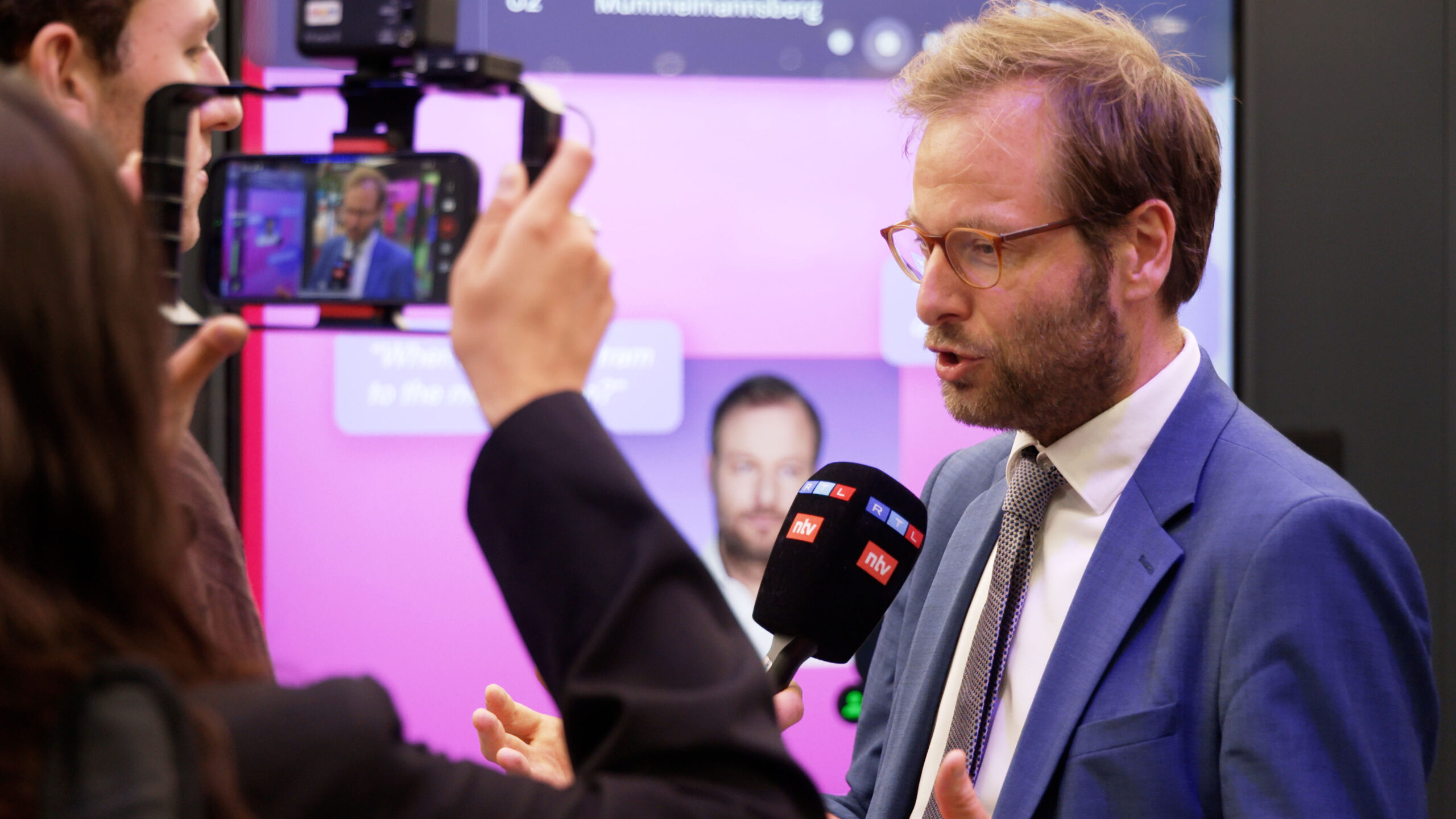
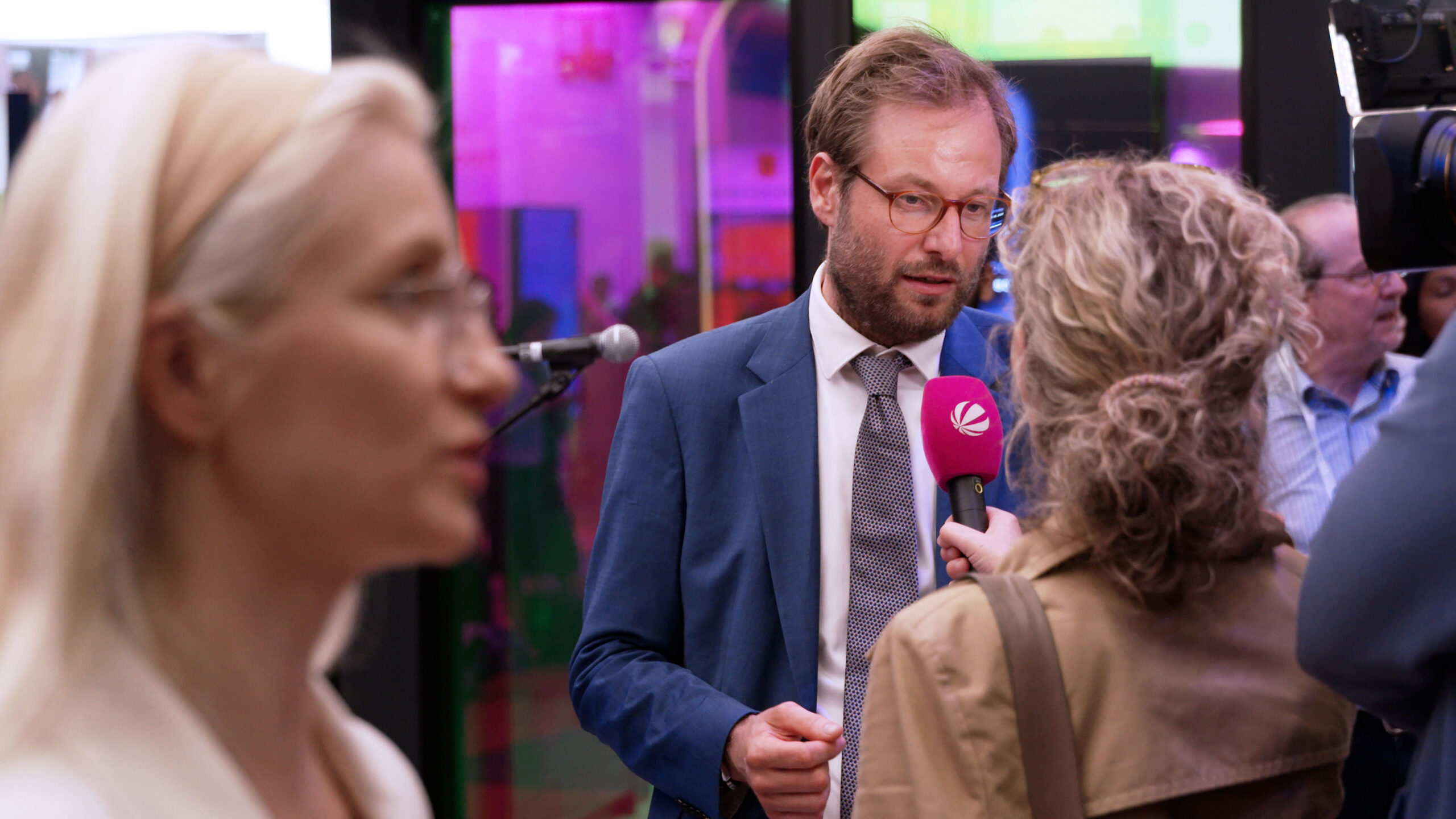
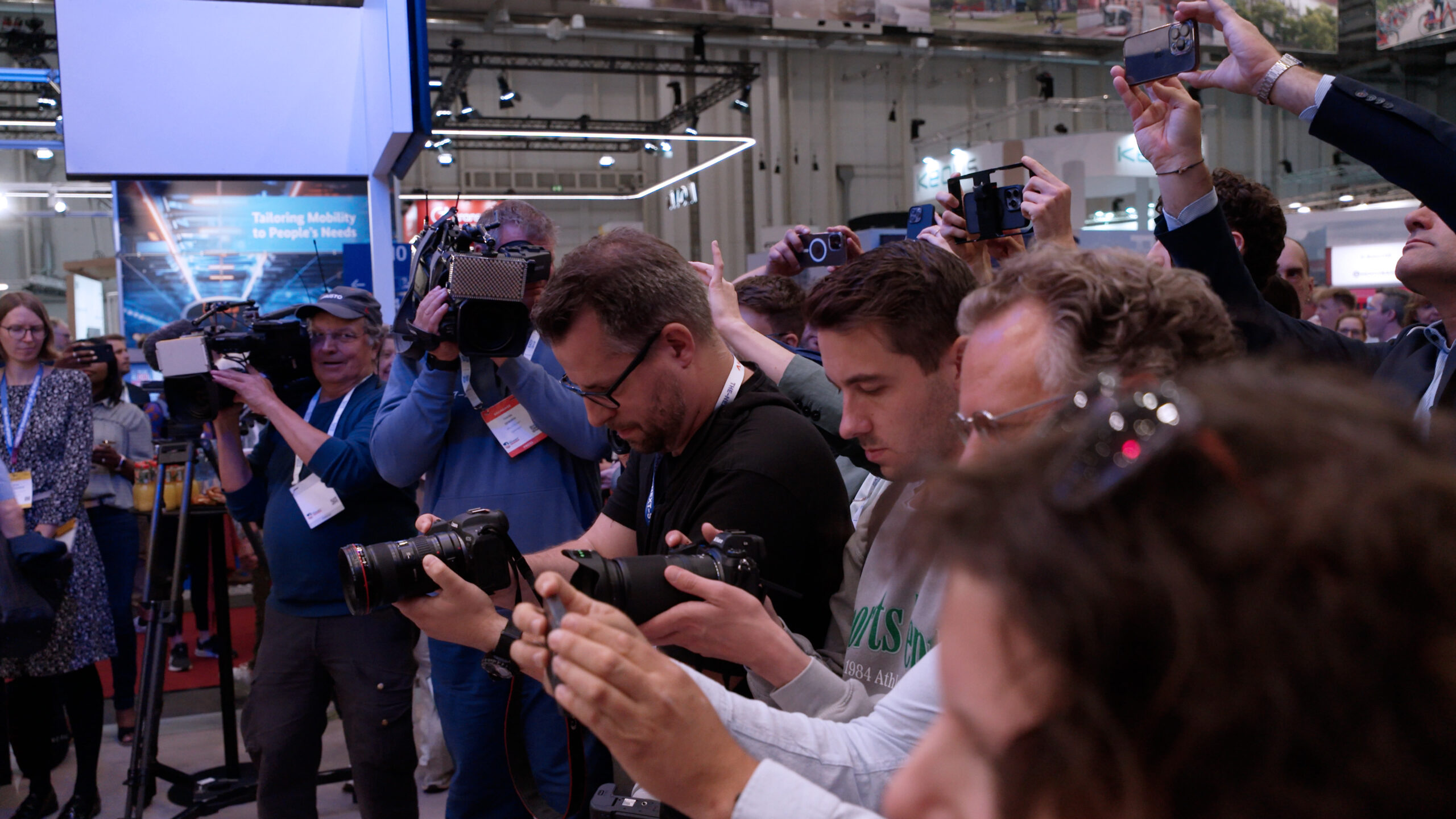
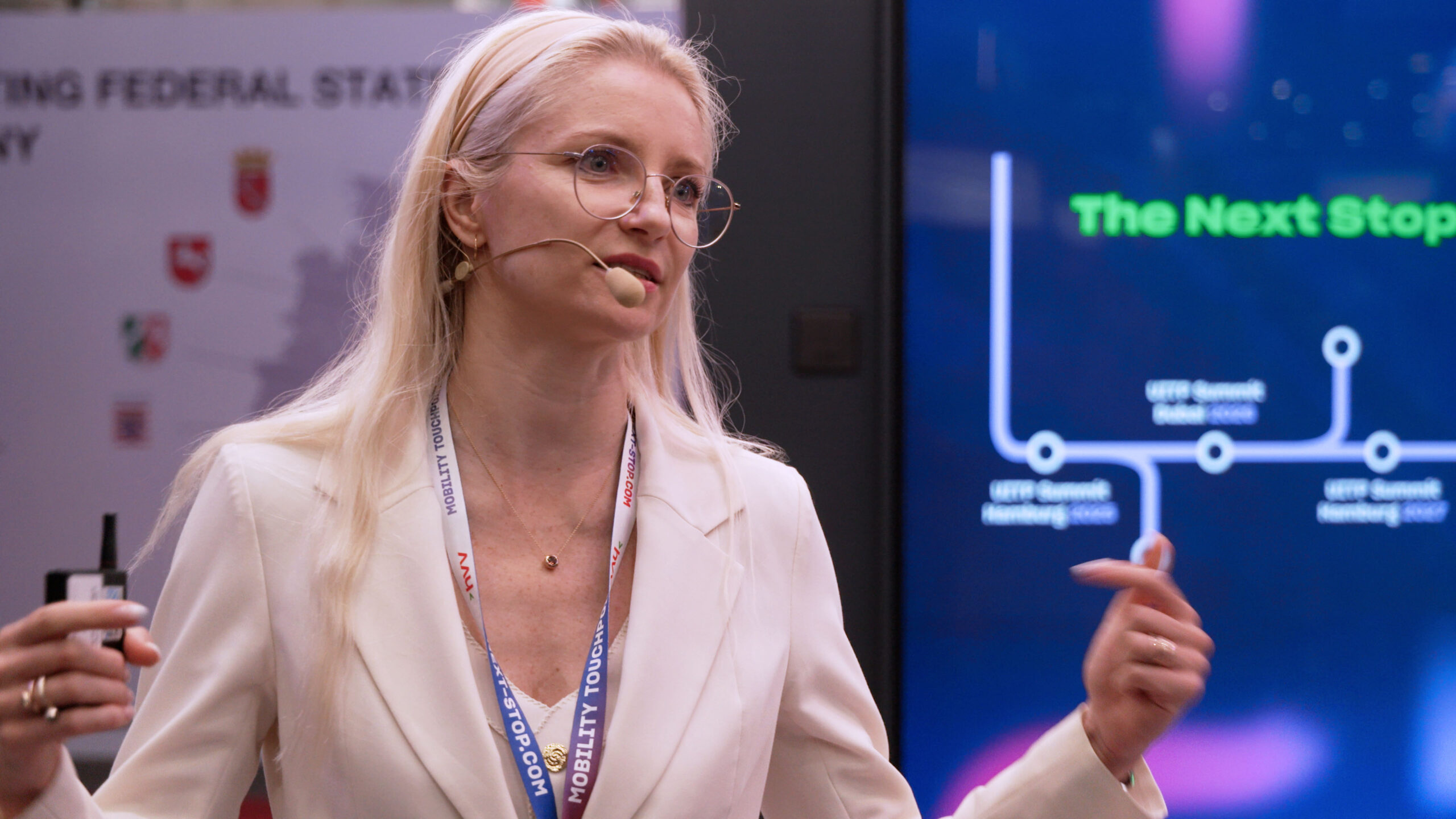
The Next Stop was the cover attraction of UITP 2025, the global public transport summit where transit authorities from around the world come to evaluate what their networks will look like in the next decade. The unit was picked up by German national television and reviewed by more than 40 media outlets across transport, design and technology press. Beyond the summit, the project anchors HVV's ongoing innovation work in this field — the elements developed inside it (the AI layer, the integrated touchpoint logic, the multi-modal framing) carry forward into the initiatives that follow.
Tell us about your project.
The first call is about understanding the question — not pitching the answer. Even if the brief is still loose.
hello@luxoom.com→