
Naga Land. Voices from Northeast India
A temporary exhibition on the third floor of the Humboldt Forum, drawn from the Naga collections of the Ethnologisches Museum, designed in collaboration with the Naga curator and artist Zubeni Lotha — and built to refuse the reduction of a living culture to its colonial-era objects.
Around three million Naga live across the Indian state of Nagaland, neighbouring states, and adjoining Myanmar. The collections of Naga objects held in Berlin reach back into a colonial period that the Naga themselves did not consent to and have not stopped resisting — Assam was absorbed into the British Empire in 1826, Indian independence in 1947 did not resolve the autonomy question, and the Naga struggle for cultural and political self-determination continues today. Thirty linguistically and culturally distinct Naga groups exist; the question of what it means to be Naga today, in a village or in a city, is openly live. The Stiftung Humboldt Forum's brief was for a temporary exhibition that drew on the Ethnologisches Museum's Naga collections without making them the whole story. Naga voices — present, named, contemporary — had to share authorship with the institutional curatorial team.
The exhibition was developed in cooperation with the Ethnologisches Museum (SMB/SPK) and with the artist and curator Zubeni Lotha from Nagaland, with the Botanischer Garten und Botanisches Museum Berlin contributing botanical expertise. The project began in 2018 with a joint research trip to Nagaland by the curatorial team, which gathered interviews with Naga experts — a craftswoman, a weaver, others — whose voices would later be present in the exhibition itself. The project then paused at the end of 2020 because of the pandemic, and opened on the third floor in 2022. It ran until May 2026.
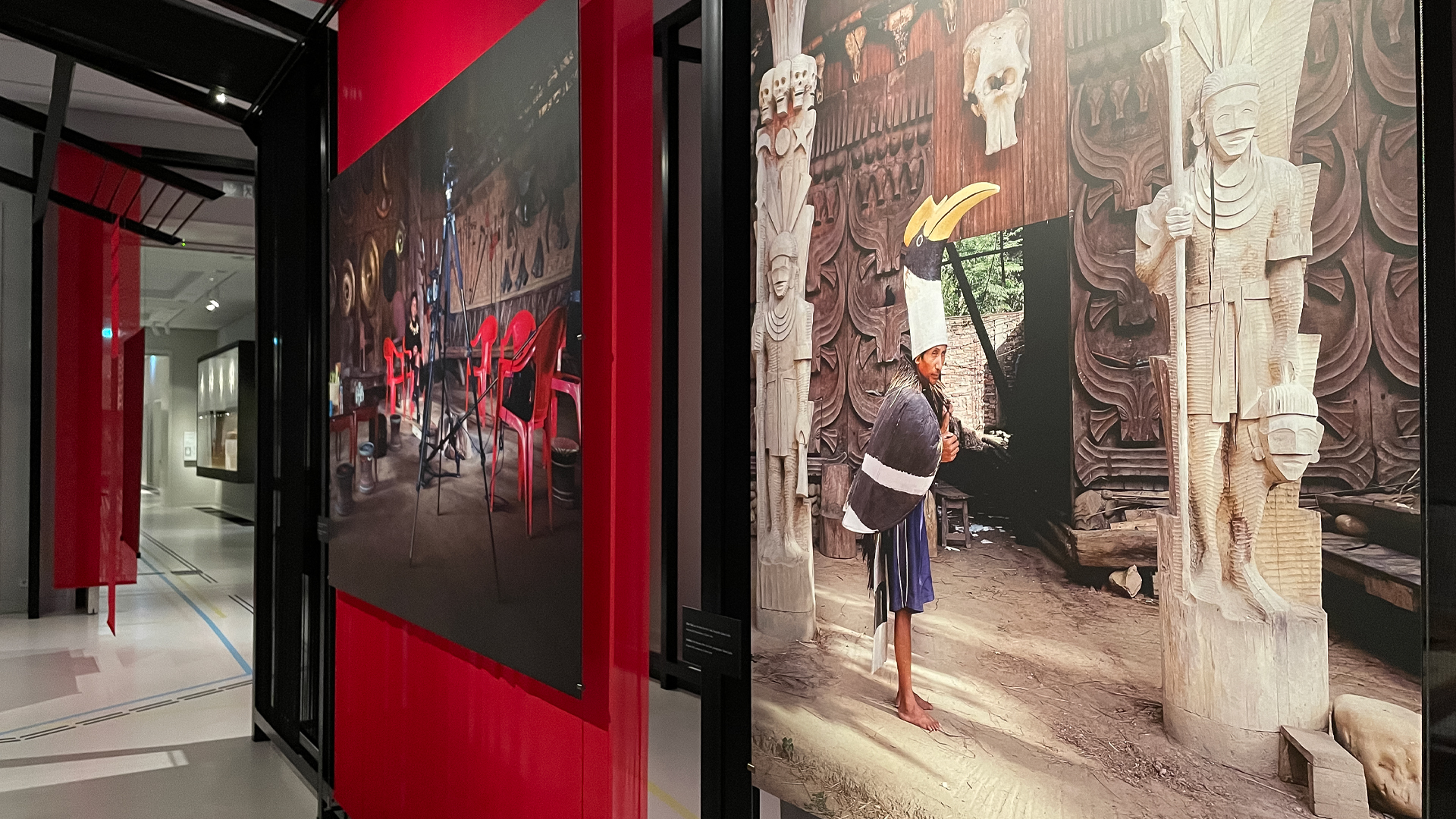
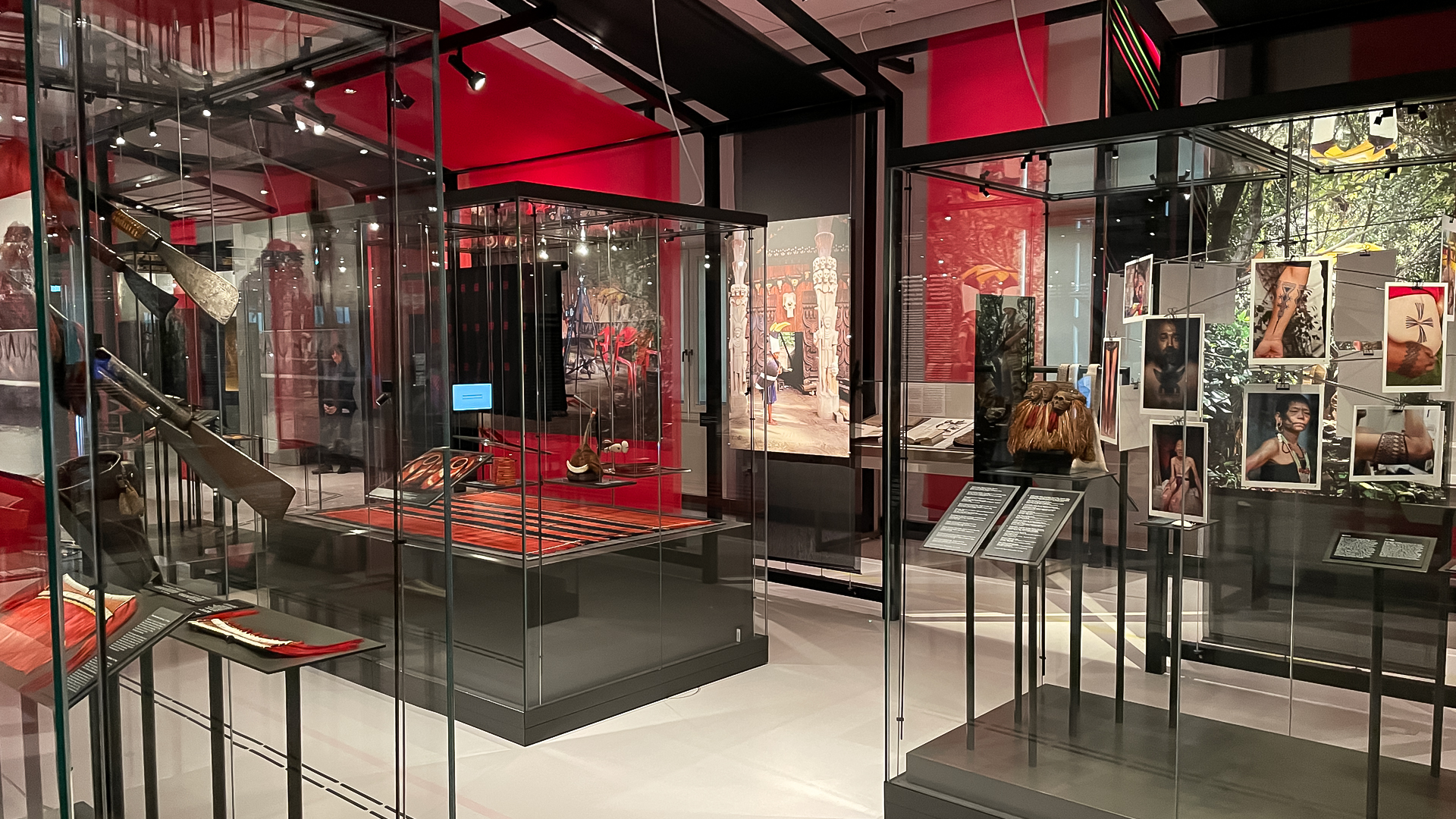
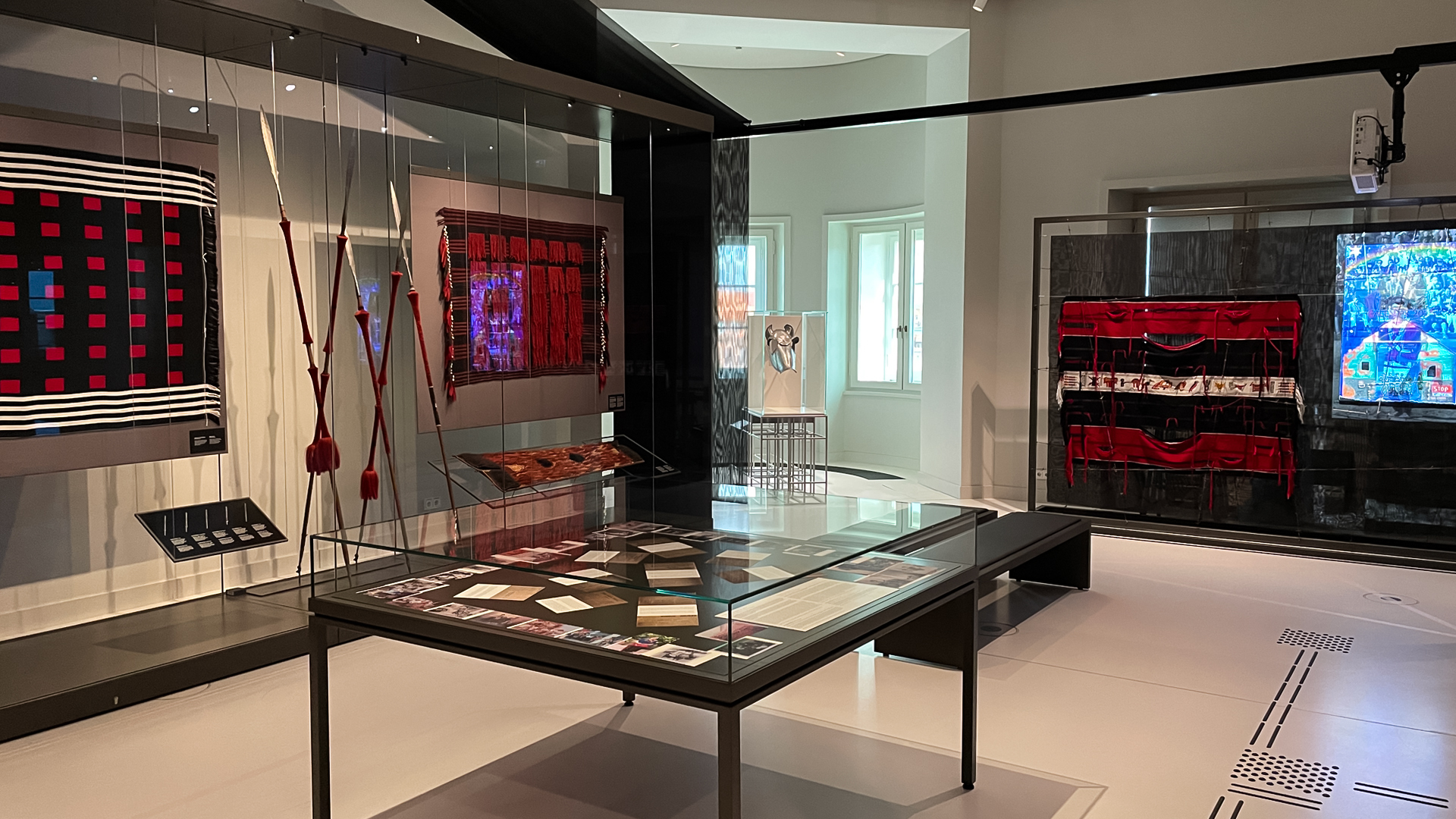
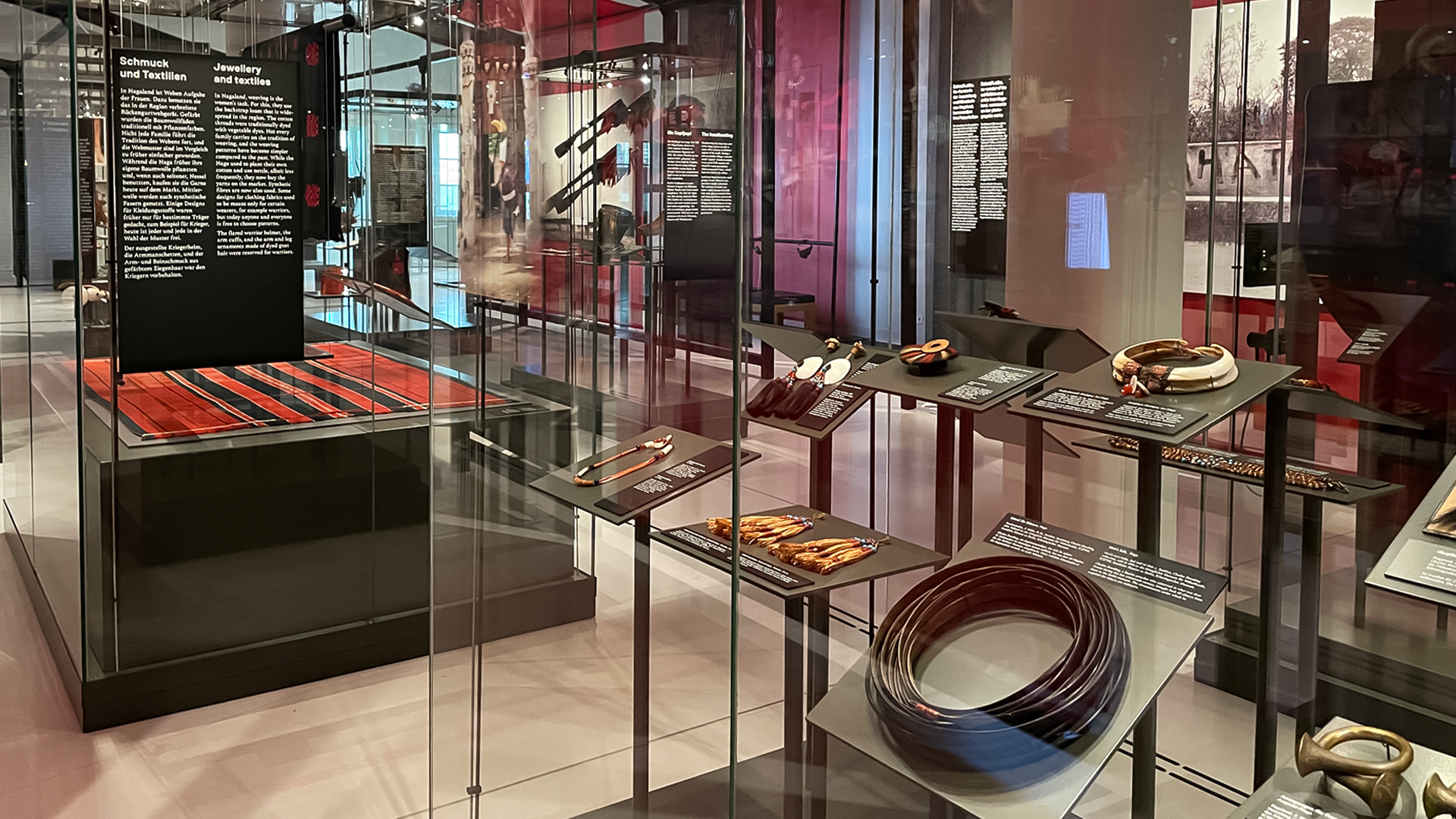
The exhibition's design language deliberately departs from the permanent ethnological displays elsewhere in the building. Openness and transparency are the organising qualities: semi-transparent materials in the showcases, layered viewpoints that combine historical objects with contemporary photography, temporary suspension structures that hold their elements visibly rather than fixing them. Visitors find new perspectives in the layering as they move; an object seen from one angle reads differently from another. The aesthetic elevation that any vitrine performs on what's inside it is countered by the surroundings the vitrine sits in — living social and cultural context, not isolation behind glass.
The exhibition does not follow pre-formulated headlines. It places incentives and prompts in the room for visitors to draw their own conclusions, and it explicitly refuses to reduce the Naga to historical objects and the colonial chapter that brought those objects to Berlin. Visitors are invited to overlay the historical-colonial image with the Naga self-image, to bring their own cultural experience into contact with Naga cultural experience, to trace how tradition shows up in everyday life now — both there and here. Old and new are deliberately juxtaposed because both are equally part of present-day Naga cultures.
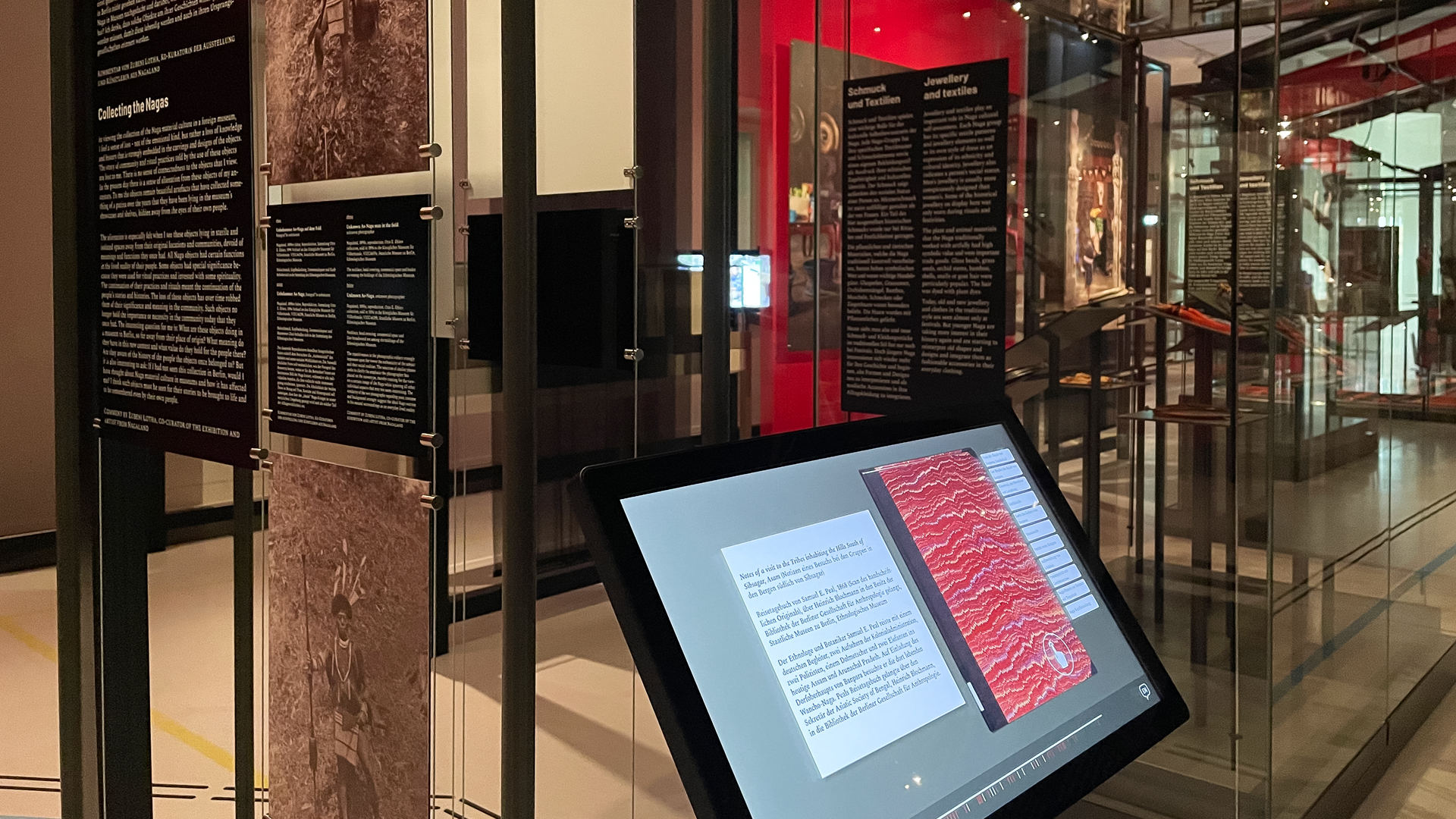
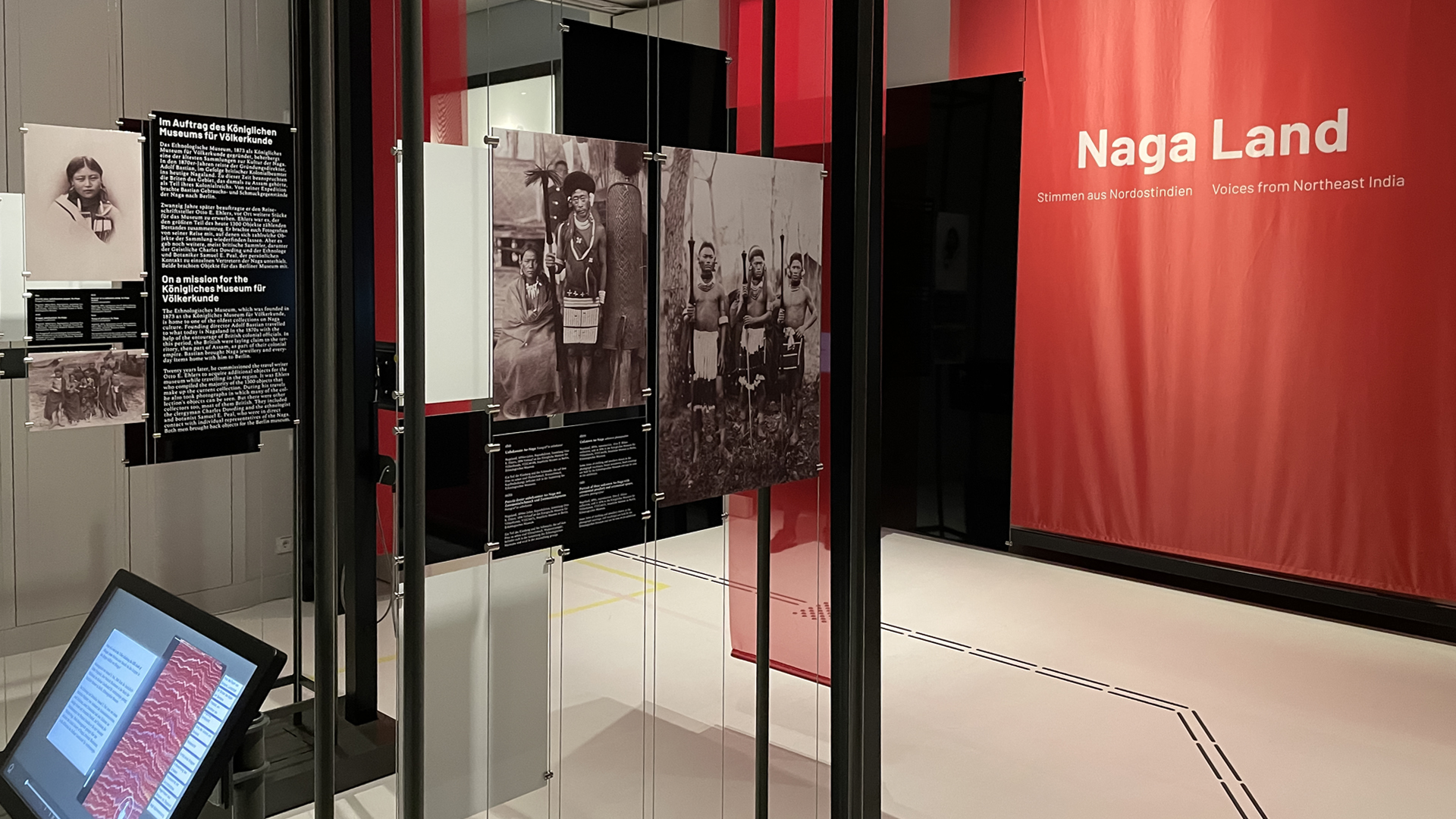
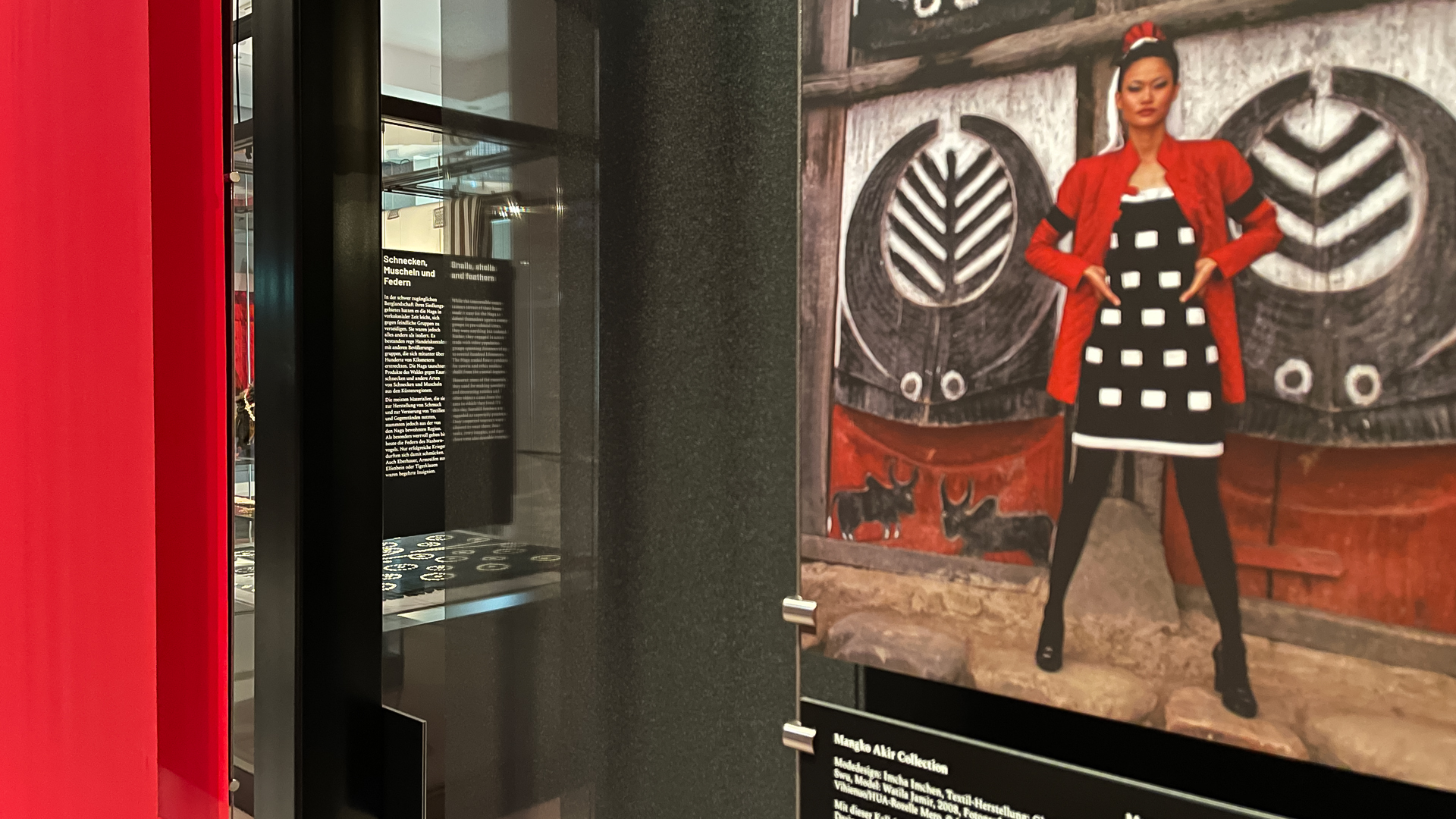
For the visitors, the exhibition is divided into two entrance areas, which offer basic information and place historical photos, and a building structure with an adjoining open space. The structure, made of steel and semi-transparent materials, is characterized inside by object showcases, whose abundance and transparency overlap with the surroundings. On the quieter side of the structure is a media track that invites visitors to linger and observe. In contrast, the Botanical track addresses the materials and skills used in the objects. The open space, which is accessed by various visitor paths, brings several contemporary elements to the visitor experience: a collection of private photographs paired with newspaper clippings and an art installation that address the Naga political-social situation. An open display case on fashion design and popular culture fits into this contemporary framework, bringing the aesthetics of the historical objects into the present and linking to the question of Naga identity.
The dual position the exhibition holds is articulated most clearly by Zubeni Lotha herself, looking at the Naga objects in the Berlin collection:
"On one hand, it's very sad to see this here, because it's dislodged. It's dislocated from its place of origin. But at the same time, it's also very interesting to see this here, because I see how the curator who is in the museum here, who is not a Naga, who is from Germany, looks at this object — and there is a cultural contact going on between these two very different cultures. These are pieces in the museum that are looked at as just pieces and objects. Whereas for me, coming from Nagaland, I see this as part of my Naga heritage, and it is a culture that is very much alive even today." > — Zubeni Lotha, curator, photographer and artist from Nagaland
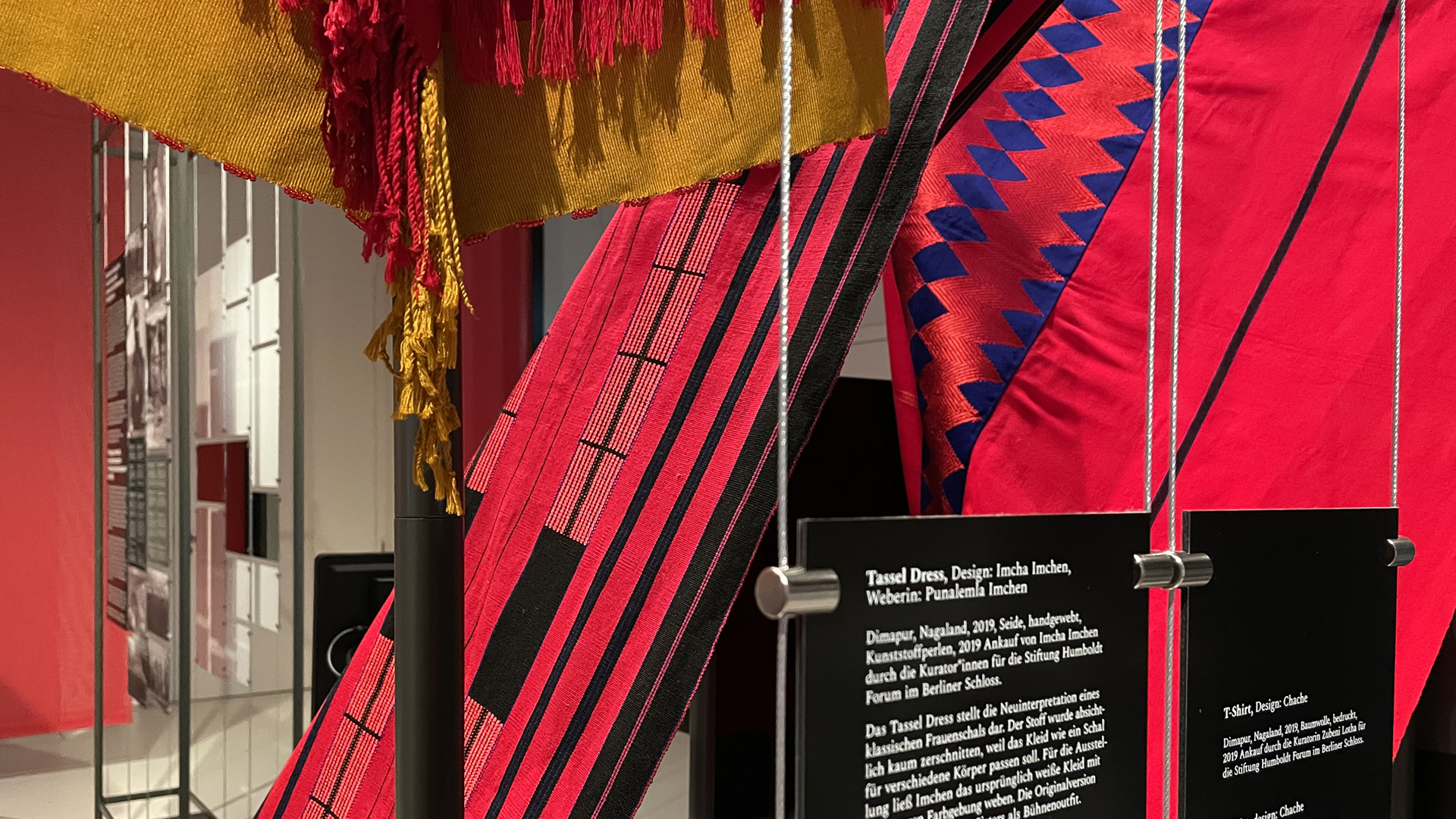
The exhibition is entered through two areas that introduce basic information and historical photography. Beyond them, a structure of steel and semi-transparent materials carries the main object showcases — abundance and transparency overlap with the surroundings, the structure and its contents reading as part of one another. An adjoining open space brings contemporary voices into the experience: a collection of private photographs paired with newspaper clippings and an art installation that address the Naga political-social situation, and an open display case featuring contemporary Naga makers — fashion designer Imcha Imchen, Instagram presence and mekhala advocate Theyie Keditso, and tattoo artist Mo Naga — bringing the aesthetic of the historical objects into the present and tying to the live question of Naga identity.
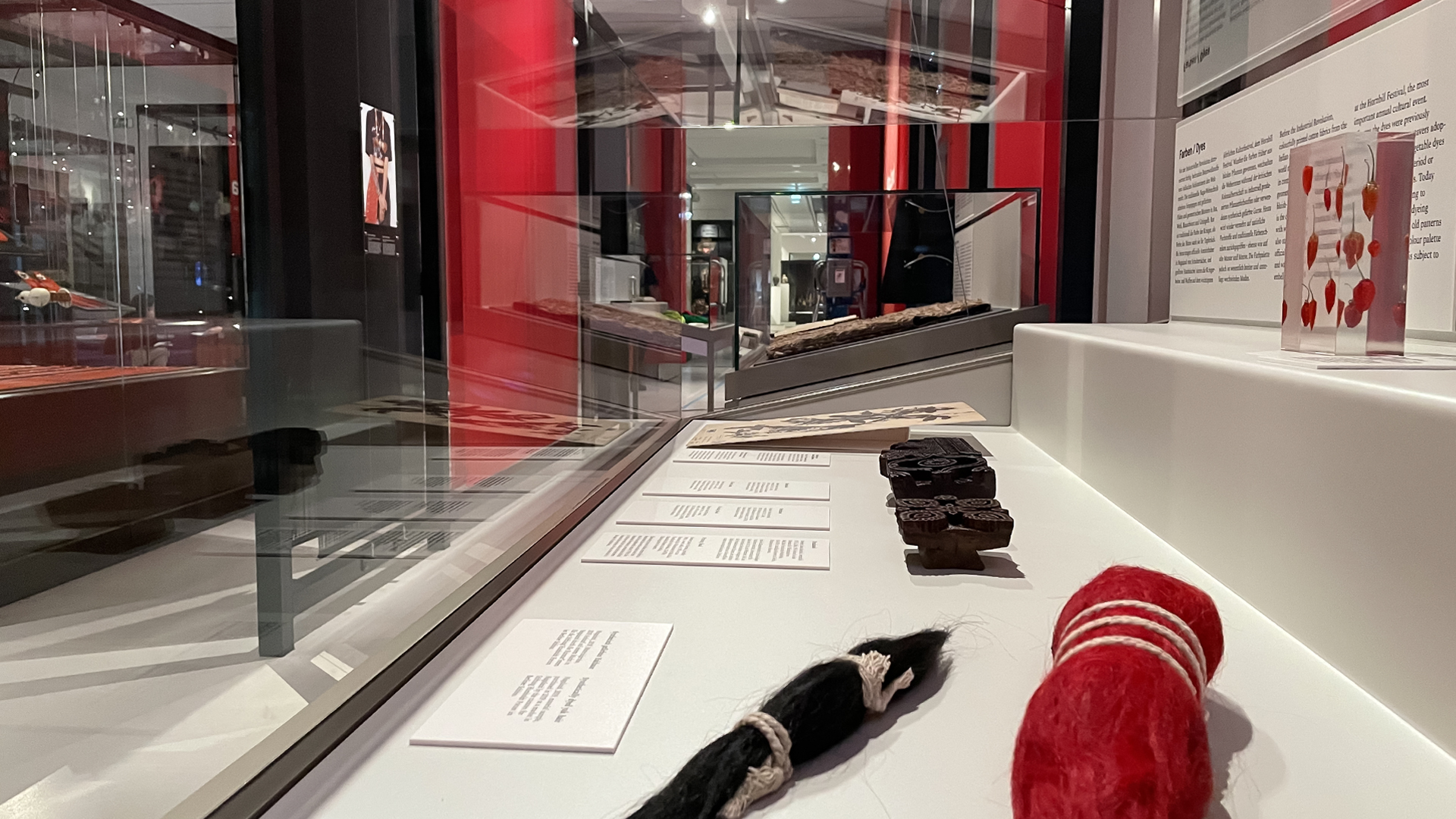
Two lanes inside the exhibition do specific, particular work. The Botanical lane — curated by a botanical curator from the Botanischer Garten und Botanisches Museum Berlin — addresses the materials and substances behind the objects: dyes, fibres, plants. The recurring observation it makes is that the materials are not always what they appear, and not always local. The dominant red across the exhibition, for example, comes from several different sources — native Himalayan dye plants, but already in the 19th century commercially grown European madder, and later synthetic dyes once those became affordable. The iridescent inner surfaces of certain pieces of men's jewellery are the elytra of a beetle that was caught in large numbers in the Naga Hills, threaded onto necklaces, and later exported to Europe to be sewn onto textiles as an early forerunner of the sequin. The colonial-era economy and the visual culture of the objects turn out to be the same story, told from two sides. The Media lane is deliberately set apart from the main visitor flow, with seating, so that visitors who want to watch the longer media pieces have a safe space to do so without other visitors having to pass through. Both lanes are particular to this exhibition; neither defines its overall structure.
The exhibition has named curatorial counterparts behind it — Roland Platz at the Ethnologisches Museum as lead curator, Zubeni Lotha as Naga curator and artist, the Botanischer Garten curatorial team, and the Stiftung Humboldt Forum exhibition leads. The point of naming is structural: this exhibition has senders, not just an anonymous institutional voice. The collaboration that produced it is open-ended and visible inside the rooms.
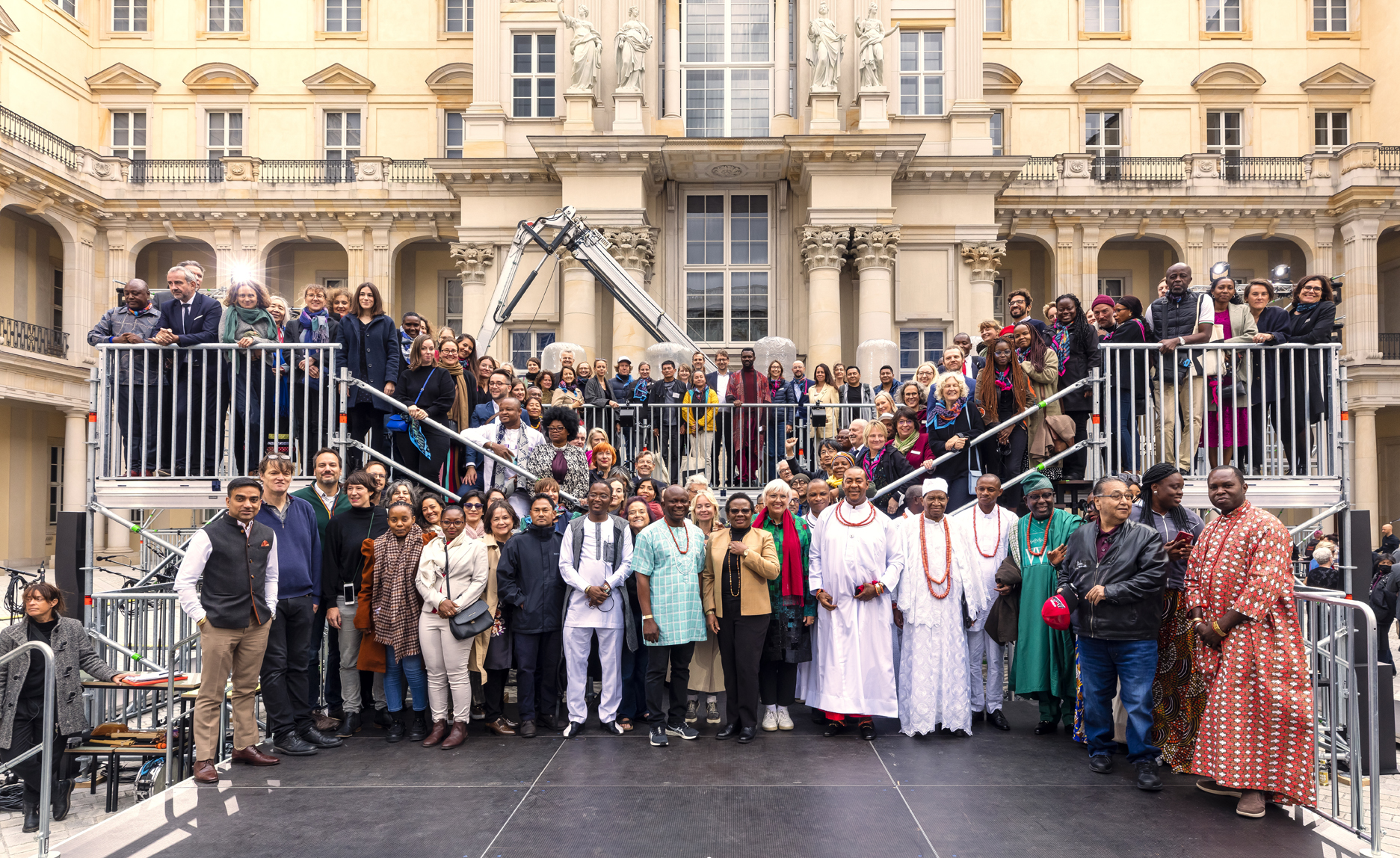
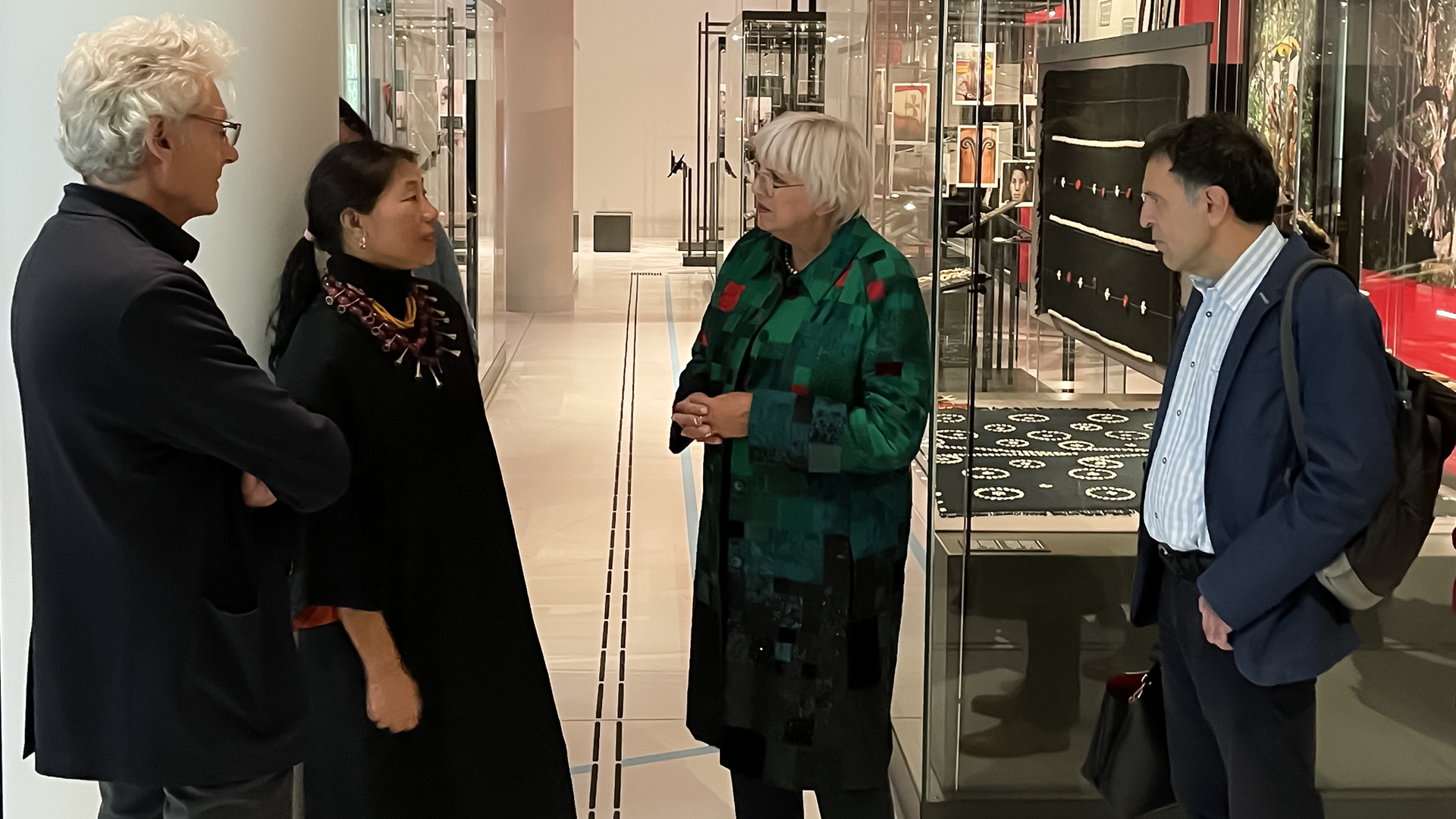
Naga Land. Voices from Northeast India* opened on the third floor of the Humboldt Forum in 2022 and ran until May 2026. The opening was attended by Claudia Roth, Minister of State for Culture, whose remarks took up the same dialogue the exhibition was built to enable. Over its full run, the exhibition held the dual position it was designed to hold: drawing on a colonial-era collection without letting that period speak for the present, and giving named Naga voices structural place inside an institution that has been part of the contested history.
This exhibition is one project inside Luxoom's longer working relationship with the Stiftung Humboldt Forum — alongside *250 Years Young!* (2019), the Intro Rooms (2021), and other commissions across the building.
Luxoom's scope: Exhibition design, exhibition graphics, media production, lighting.
Curatorial team: Roland Platz (Lead Curator, Ethnologisches Museum); Zubeni Lotha (Curator, Photographer and Artist from Nagaland); Kathrin Grotz (Curator, Institut für Museumsforschung); Barbara Lenz (Curator of Education and Outreach, SHF); Elisabeth Seyerl-Langkamp (Curator, SHF).
Project management (SHF): Nadine Ney.
Cooperation partners: Ethnologisches Museum of the Staatliche Museen zu Berlin / Stiftung Preußischer Kulturbesitz; Botanischer Garten und Botanisches Museum Berlin.
Lenders: Staatliche Museen zu Berlin / SPK; Botanischer Garten und Botanisches Museum Berlin; KHM-Museumsverband, Weltmuseum Wien; and private lenders.
Funding: Federal Government Commissioner for Culture and the Media (Bundesregierung für Kultur und Medien), in line with a resolution by the German Bundestag.
Tell us about your project.
The first call is about understanding the question — not pitching the answer. Even if the brief is still loose.
hello@luxoom.com→