
Berlin Global
The service, UX and UI system behind Berlin Global — Kulturprojekte Berlin's permanent Berlin exhibition inside the Humboldt Forum — designed to make a personalised, multi-station visitor journey legible, accessible, and continuously operable across roughly two dozen station types.
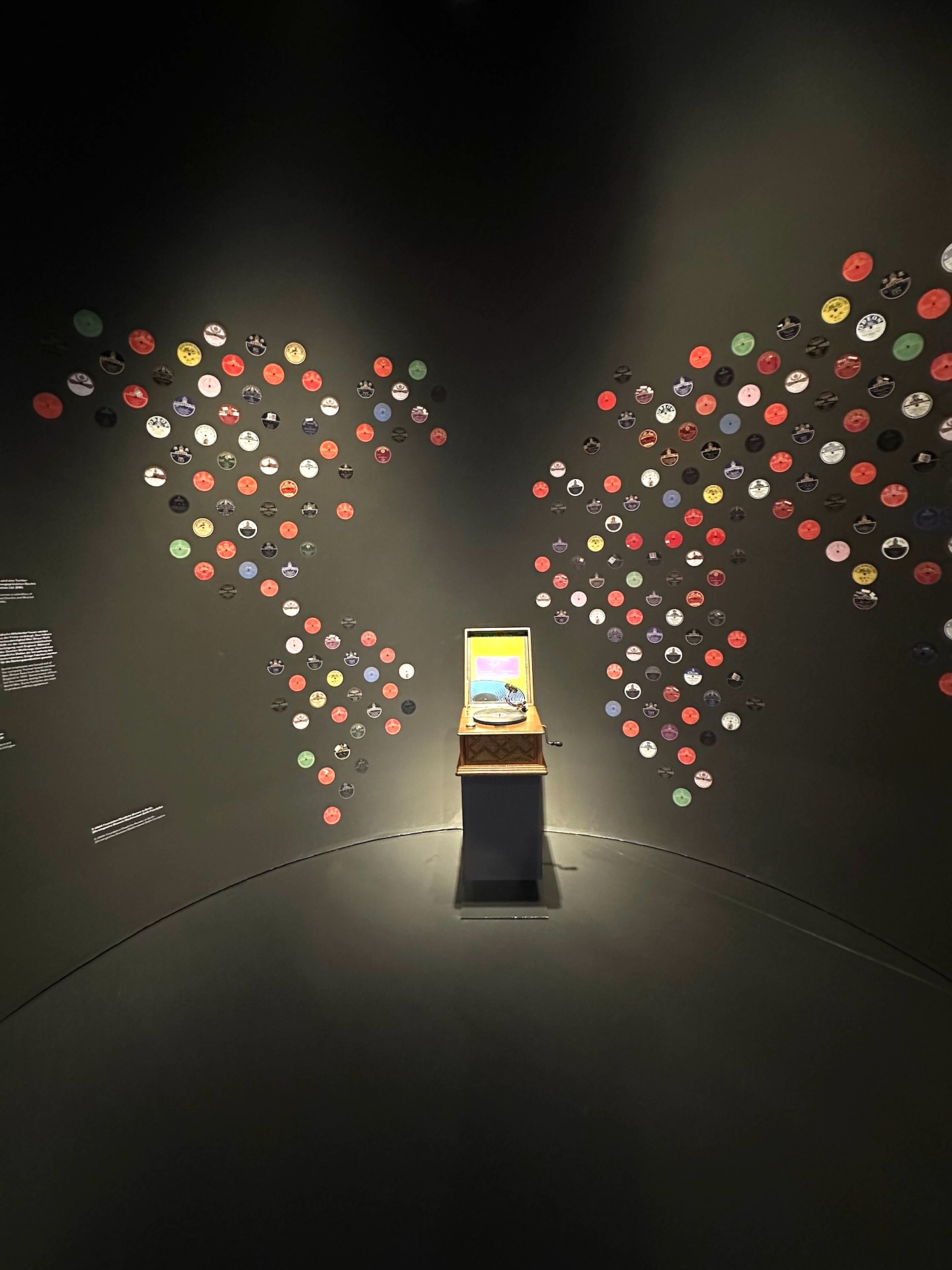
Berlin Global is Kulturprojekte Berlin's permanent Berlin exhibition, occupying the first floor of the Humboldt Forum. The exhibition design and the interaction concept — including the personal armband that carries each visitor through the show, casts their votes, and produces a printed personal result at the end — came from another studio. Luxoom's brief was different: make the whole visitor-facing system work, work every day, and explain itself to the visitor.
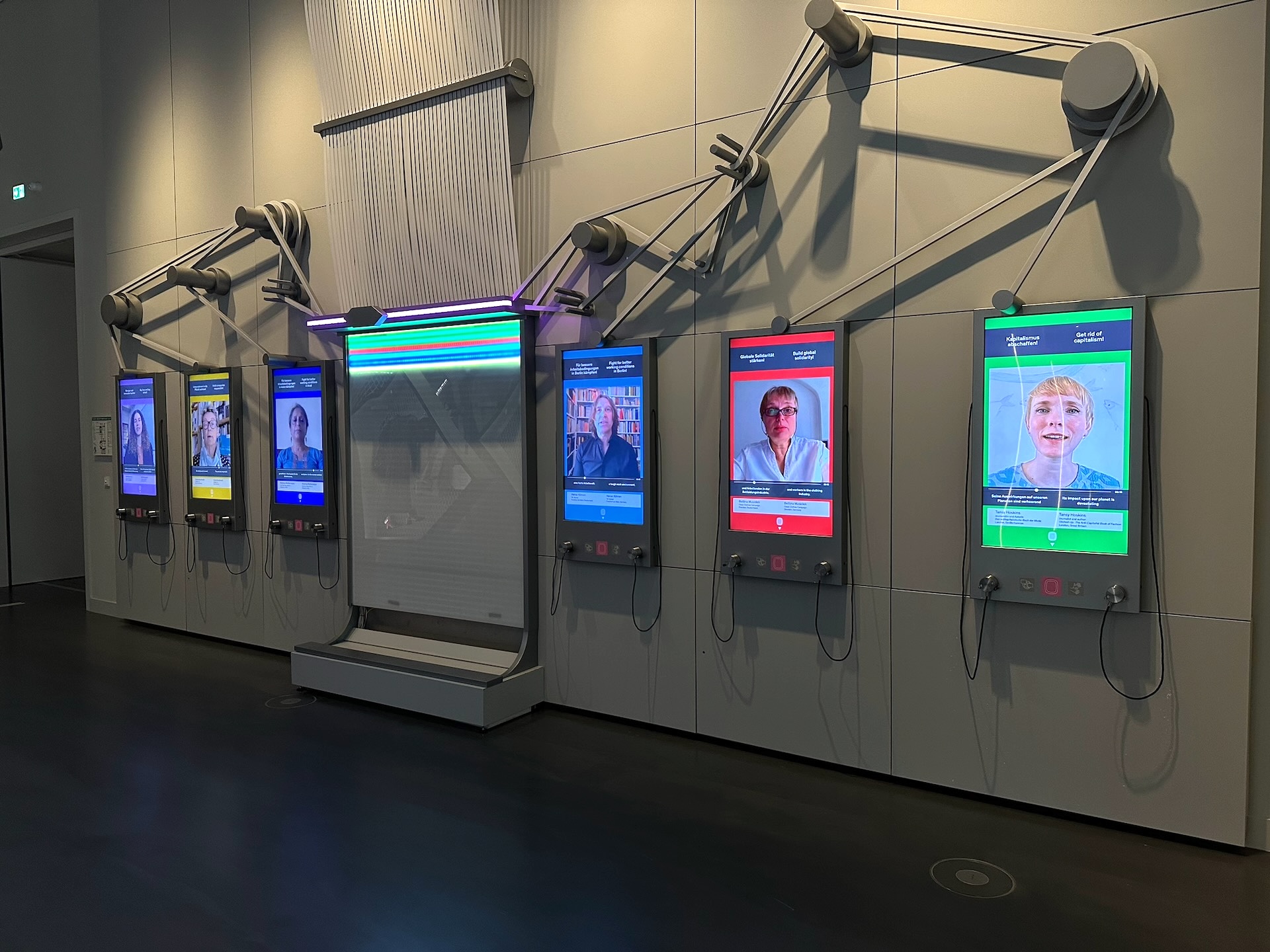
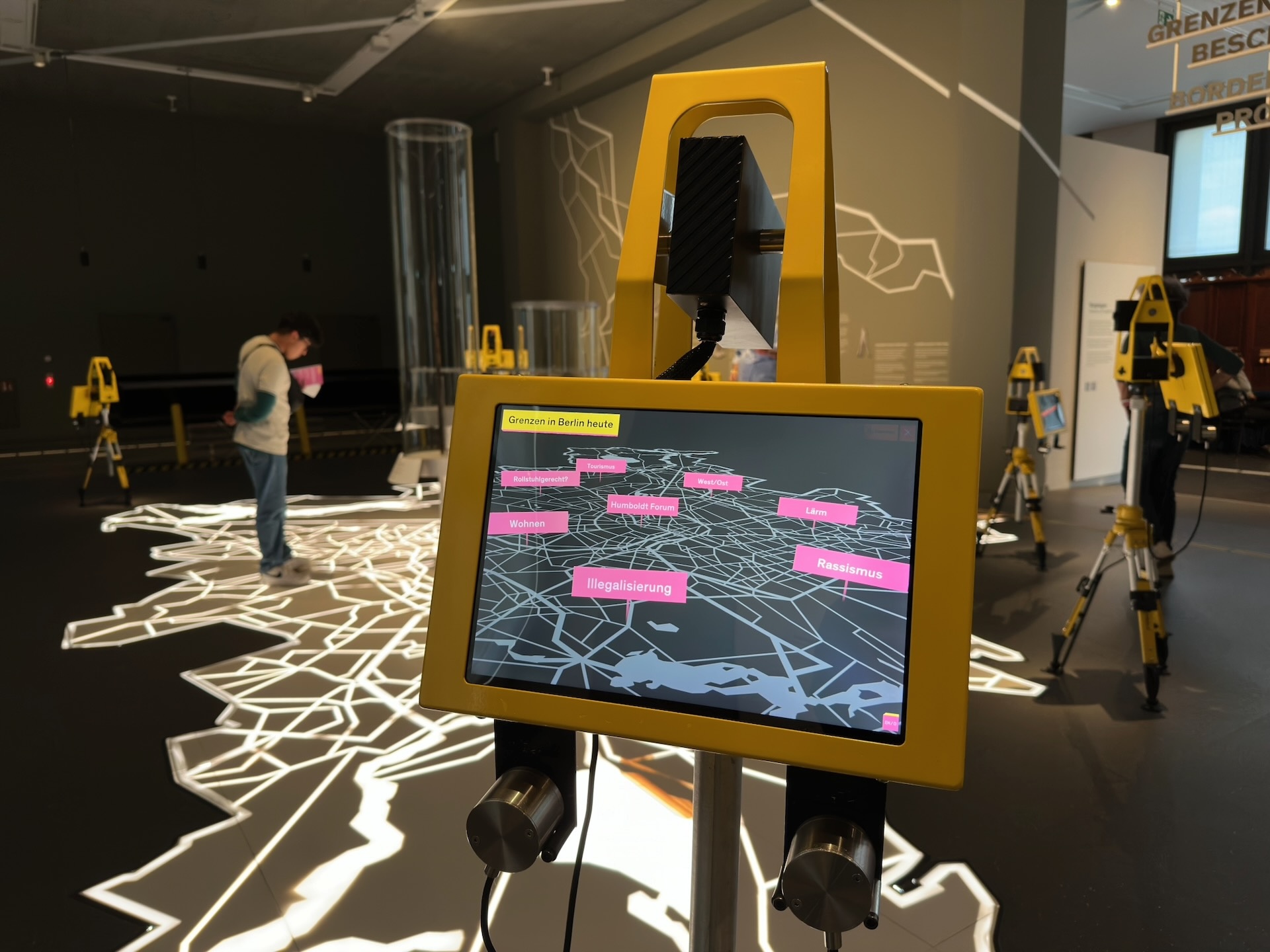
That brief turned out to be more demanding than it looked from the outside. Berlin Global runs across roughly two dozen station types spread through the exhibition, each with its own hardware, its own screen size and resolution, its own interaction, and its own contribution to the visitor's overall journey. The curatorial team was large and polyphonic; the ideas at the start were more numerous than any visitor would have followed. Luxoom's role was to make the experience one experience.
The first work was filtering. Co-creation workshops with the curatorial team took the abundance of proposed interactions and moves and pared them back until what was left was small, clear, and welcoming enough for a first-time visitor with no instruction. What survived went into a service architecture that treated every visitor moment as a service design question: what has to be here, how does this station relate to what came before and what's next, what can be removed. Reduction was the design act. Anything left in the system had to earn its place.
With thousands of ideas pouring in from the curators, our task was to carefully filter and distill them into a select few, easily accessible invitations to interact.
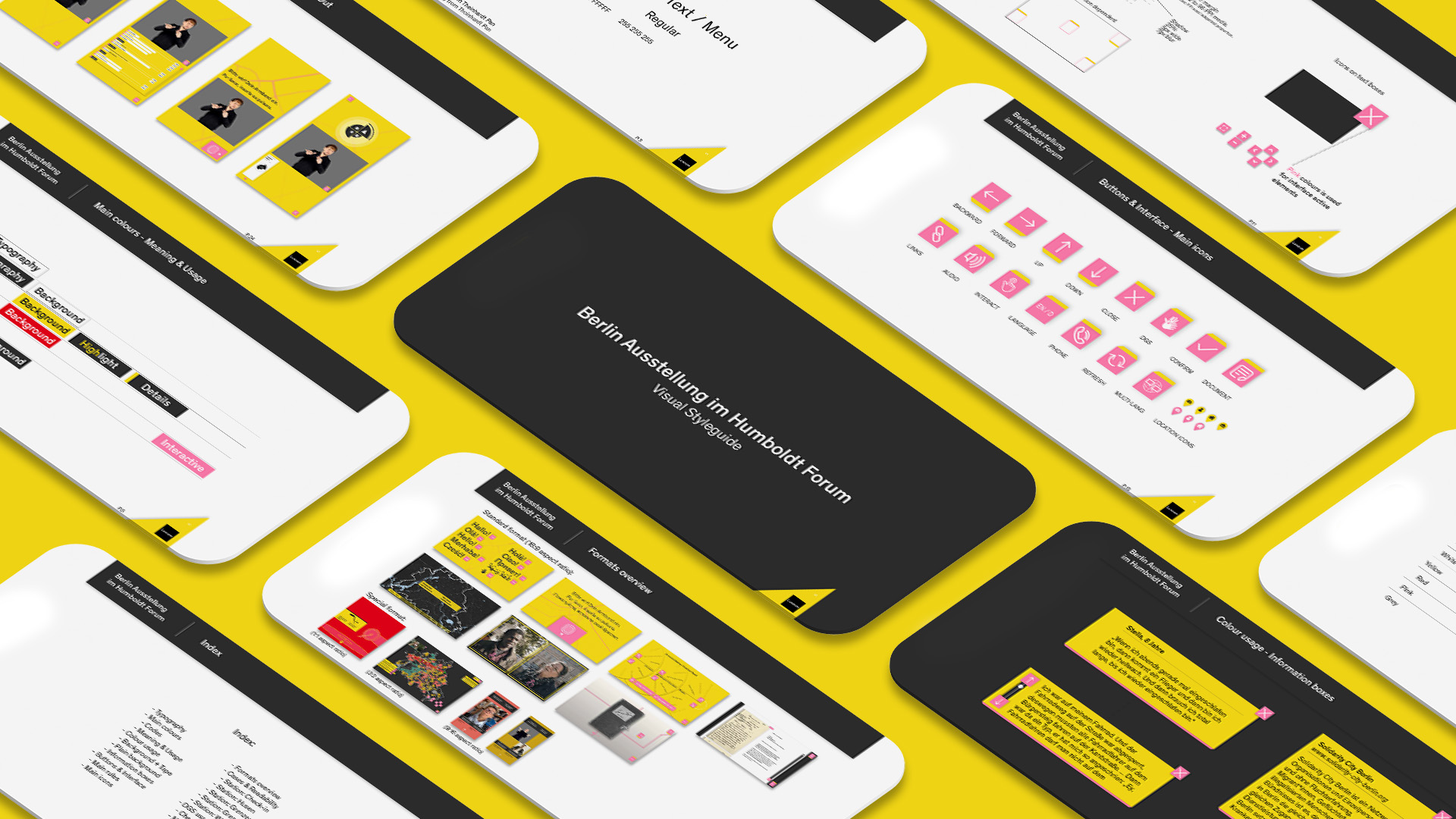
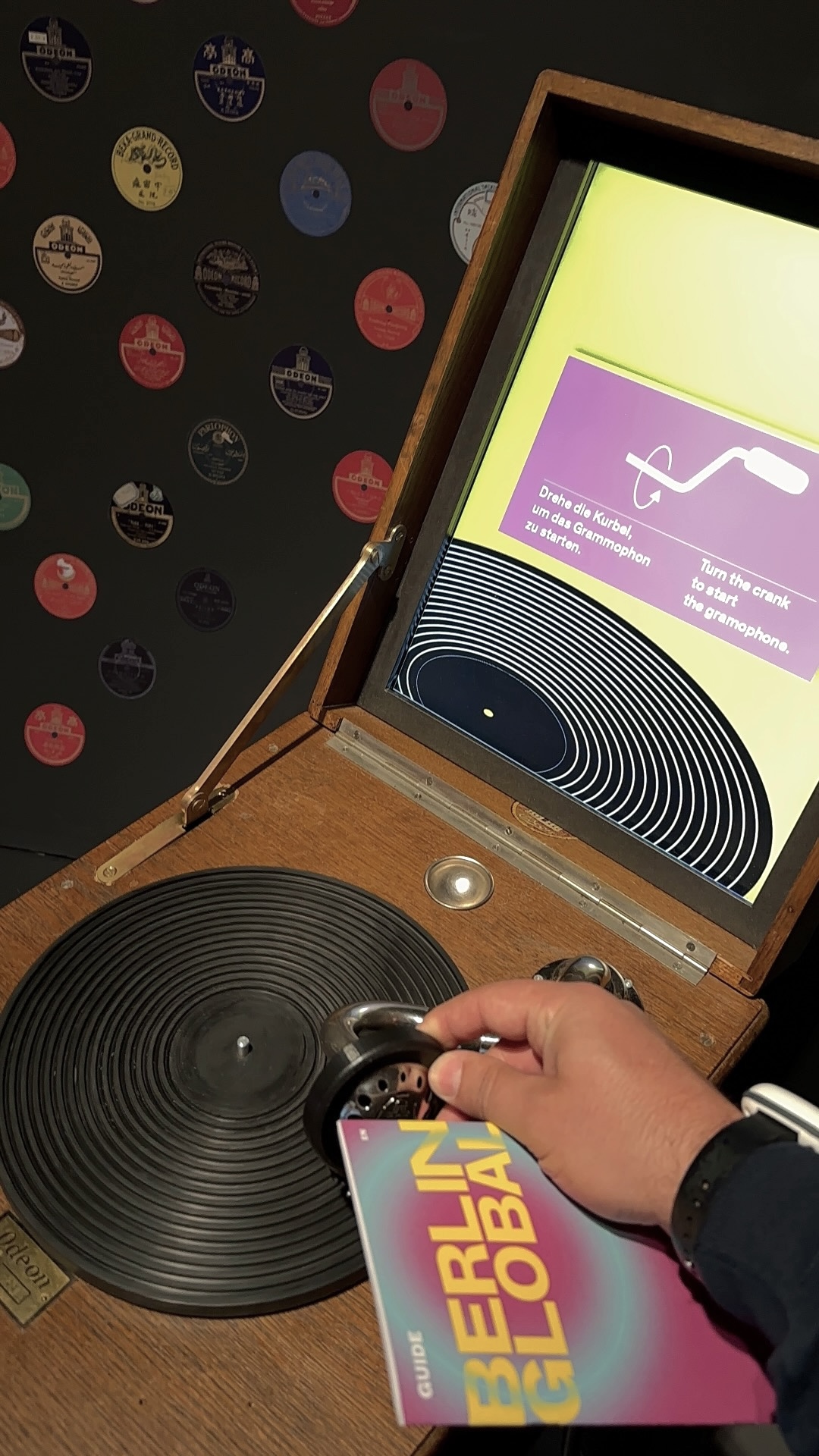
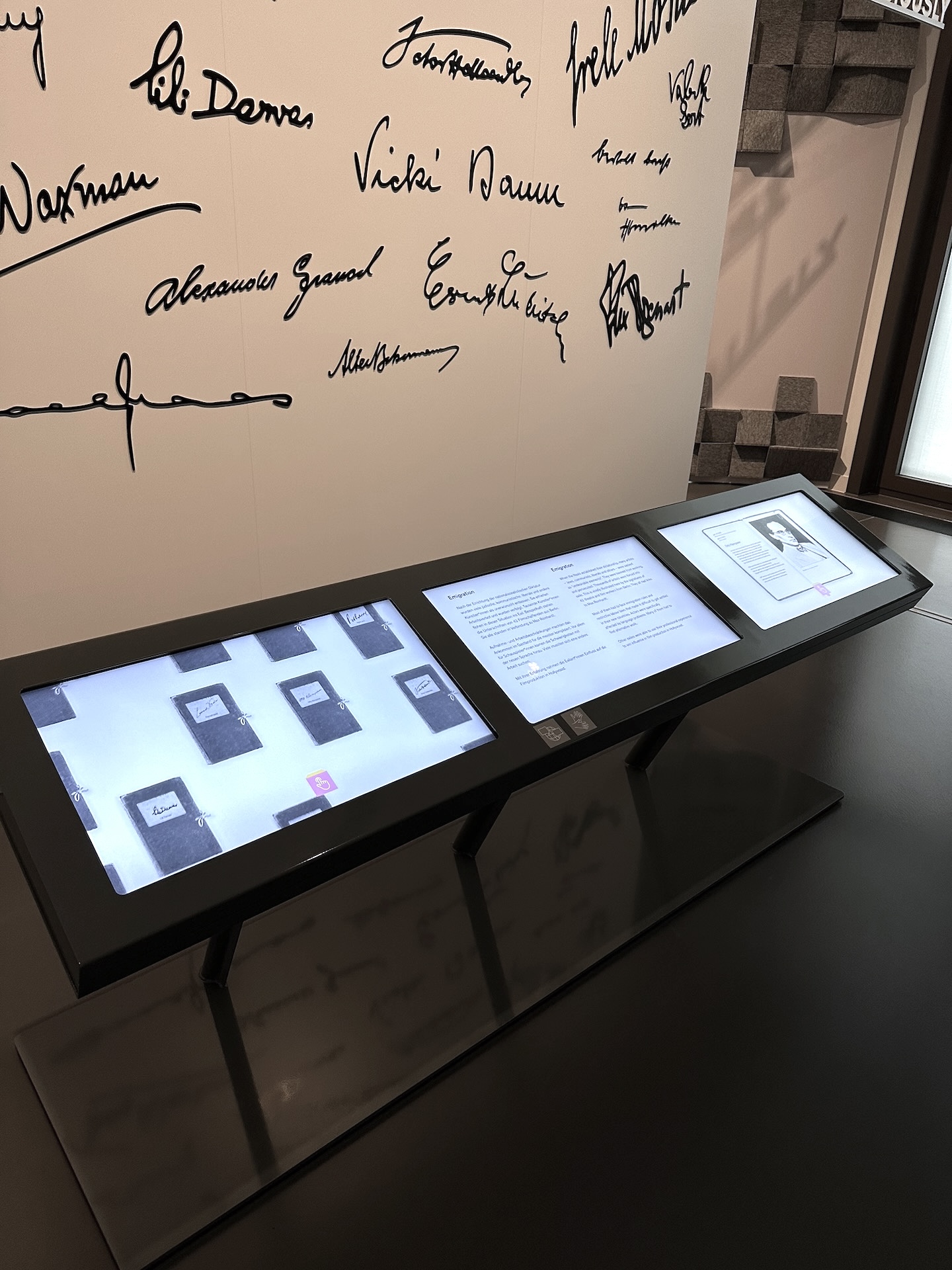
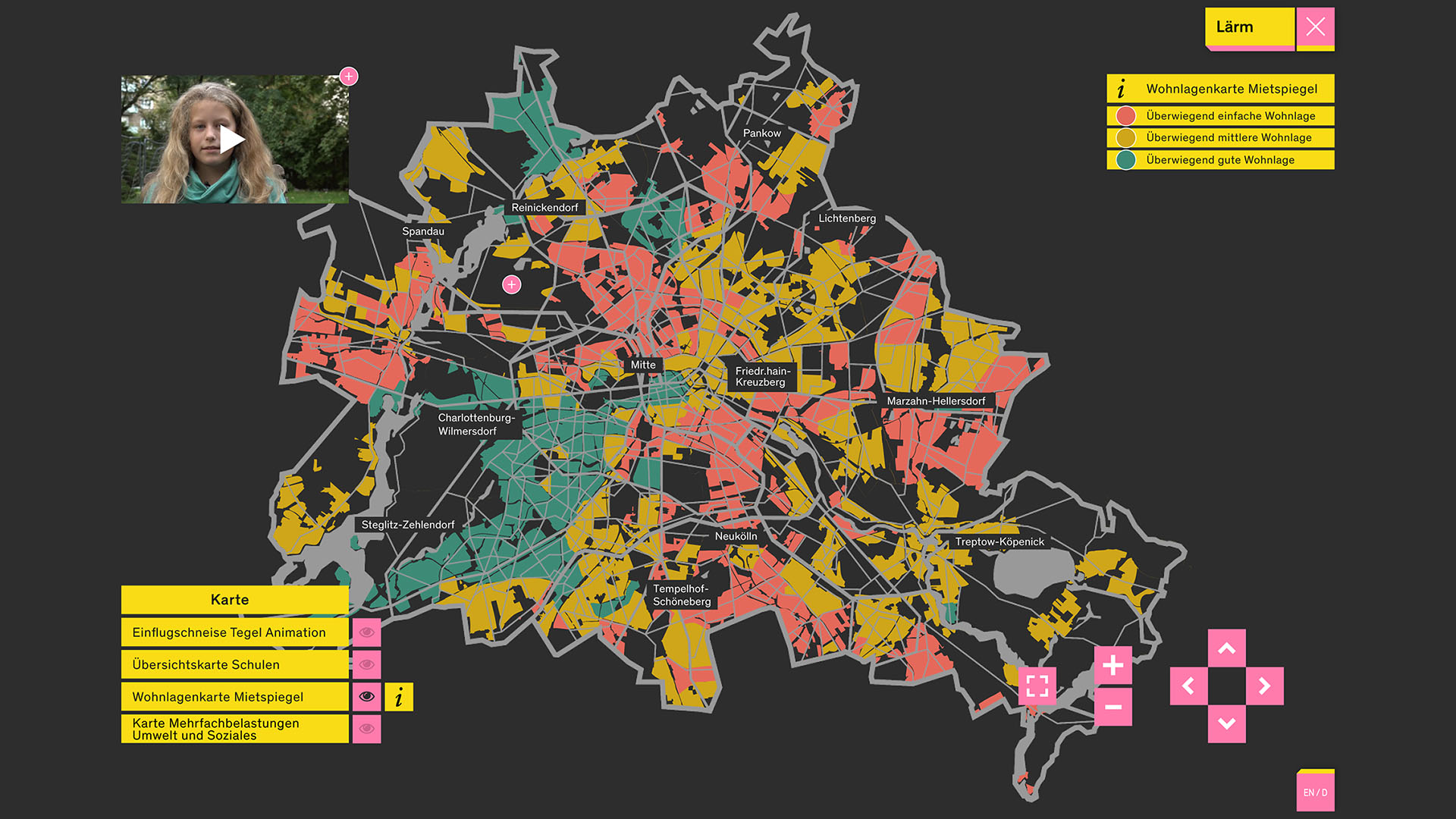
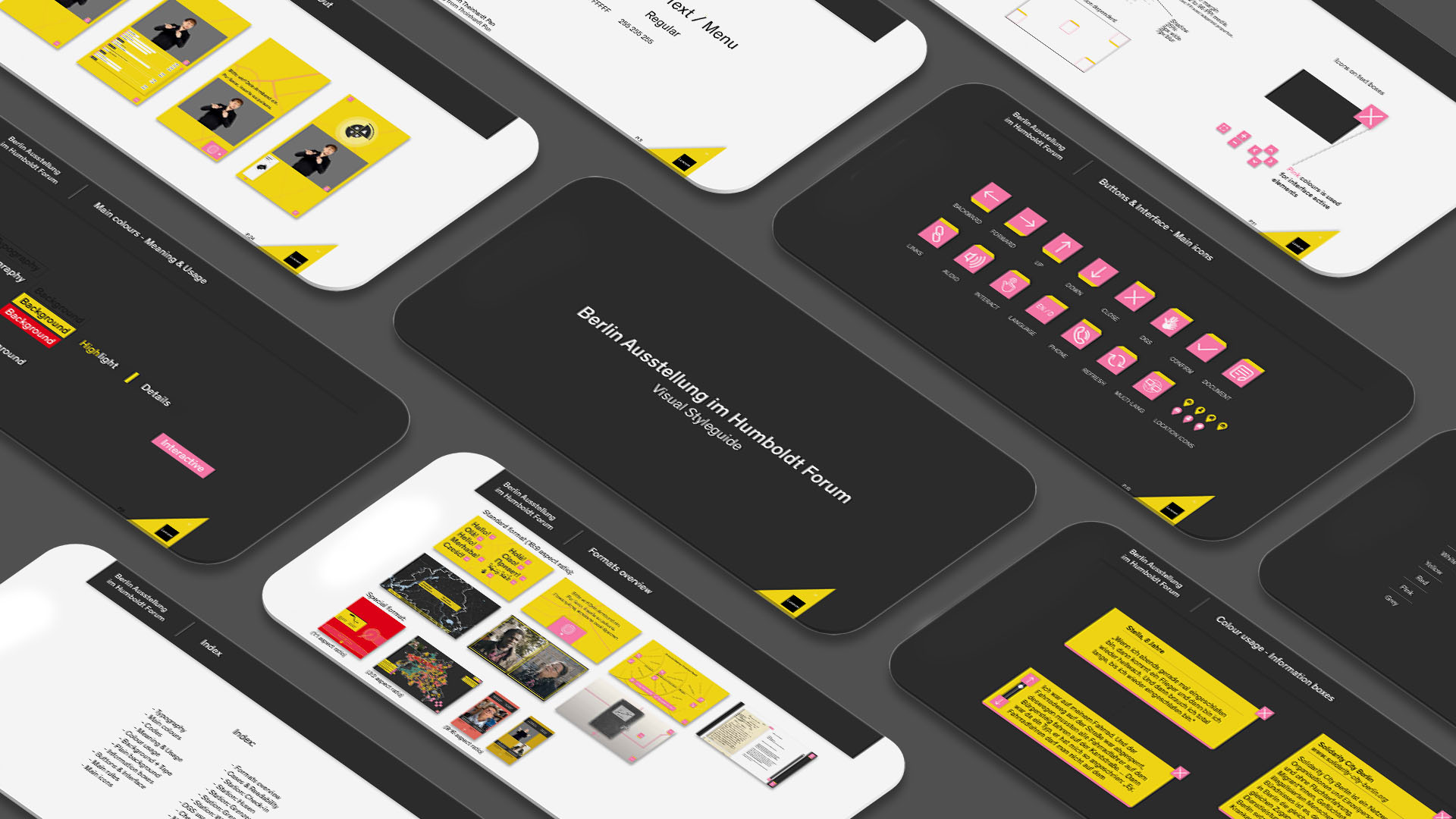
The Visual Styleguide sits under the whole exhibition. Theinhardt Pan is the primary typeface, with Chinese, Japanese and Arabic families scaled to match visually. A tight colour palette carries fixed meanings — pink for anything the visitor can interact with, yellow for backgrounds and highlights, red and grey and black and white each with a defined role — so the same colour cue means the same thing whether the visitor is at a 5-inch touch display or a 43-inch video screen. Icon language, button behaviour, text hierarchy, and readability rules are calibrated per screen size and pixel density, from 10.5 PPI on the largest wall projections up to 267 PPI on the smallest touch devices. A visitor doesn't need to notice this; they only need to arrive at any station and know where they are.
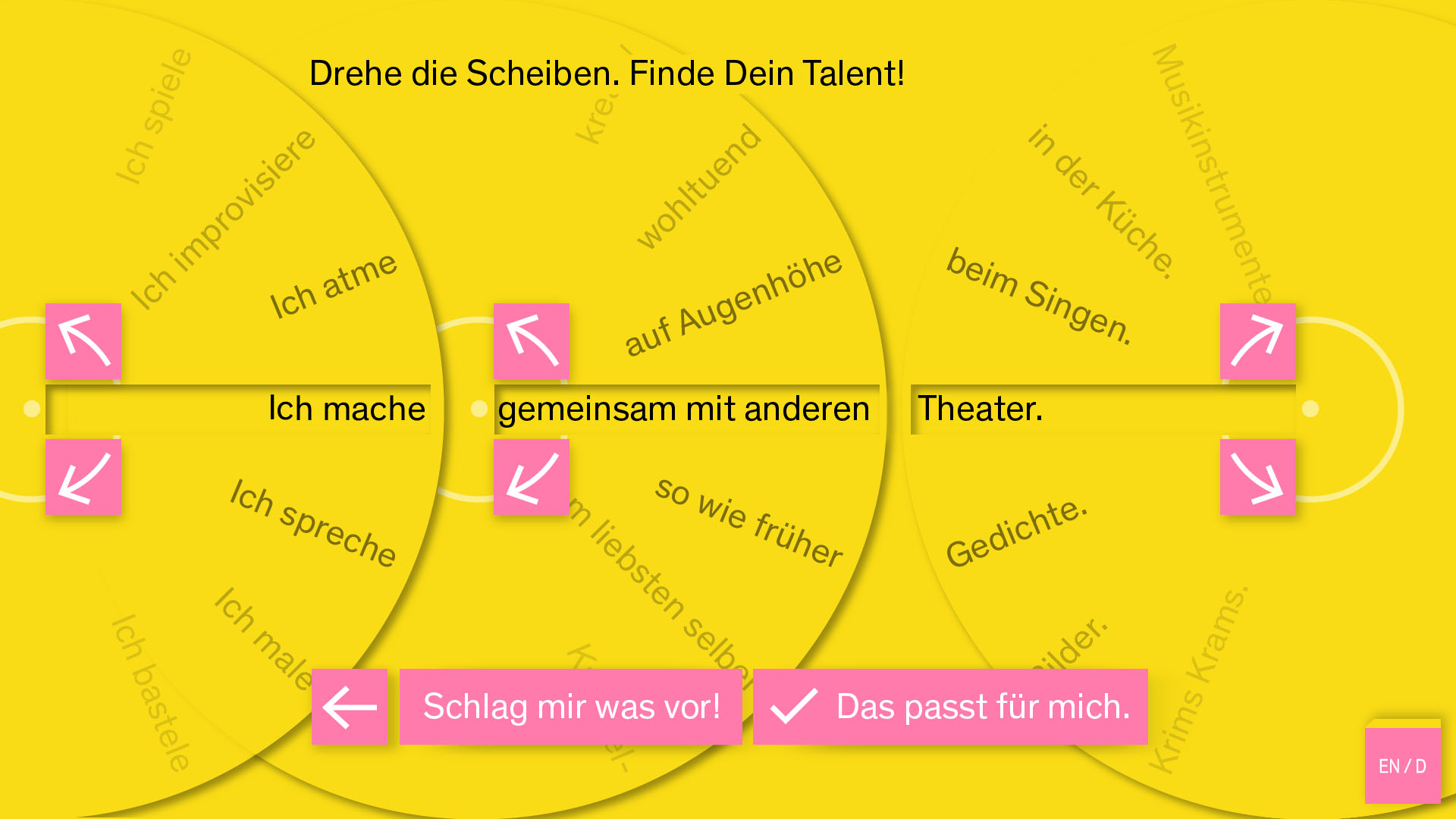
Accessibility shaped the system rather than being added to it. German Sign Language (DGS) video content is documented in the styleguide as a first-class interaction path — not an alternative, an equivalent — with its own layout rules across the visitor's journey (Check-in, Mein Talent, Webstuhl, Check-out). Contrast ratios, minimum type sizes, ergonomic heights (186 cm at 95th percentile as reference), 60% opacity overlays where brand colours would compromise readability — the design rules exist because the exhibition has to work for the visitor who needs them, not because a standard was cited. The in-house accessibility office at the Humboldt Forum reviewed the work at every stage; nothing goes live in the building that isn't fully accessible.
Berlin Global is more Luxoom-built software than most visitors would guess. Not all of it — the exhibition has multiple software contributors — but substantial parts of the interactive layer were developed by Luxoom: the systems that calculate each visitor's wristband results, several of the interactive stations themselves, and the integration work that ties the whole visitor journey together across hardware and content. Much of that interactive layer runs on Unity, and the visitor's individual journey — every vote cast, every talent selected, every station response — has to be captured, carried, and finally printed as a personalised ticket at the Check-out station. Getting Unity to talk cleanly to the ticket-printer hardware wasn't a solved problem when we started; Luxoom wrote printer drivers to close that gap. Fitting the technical integration to the visitor experience — rather than the other way around — is what makes the printed personal result feel like the natural end of a conversation, not the output of a machine.
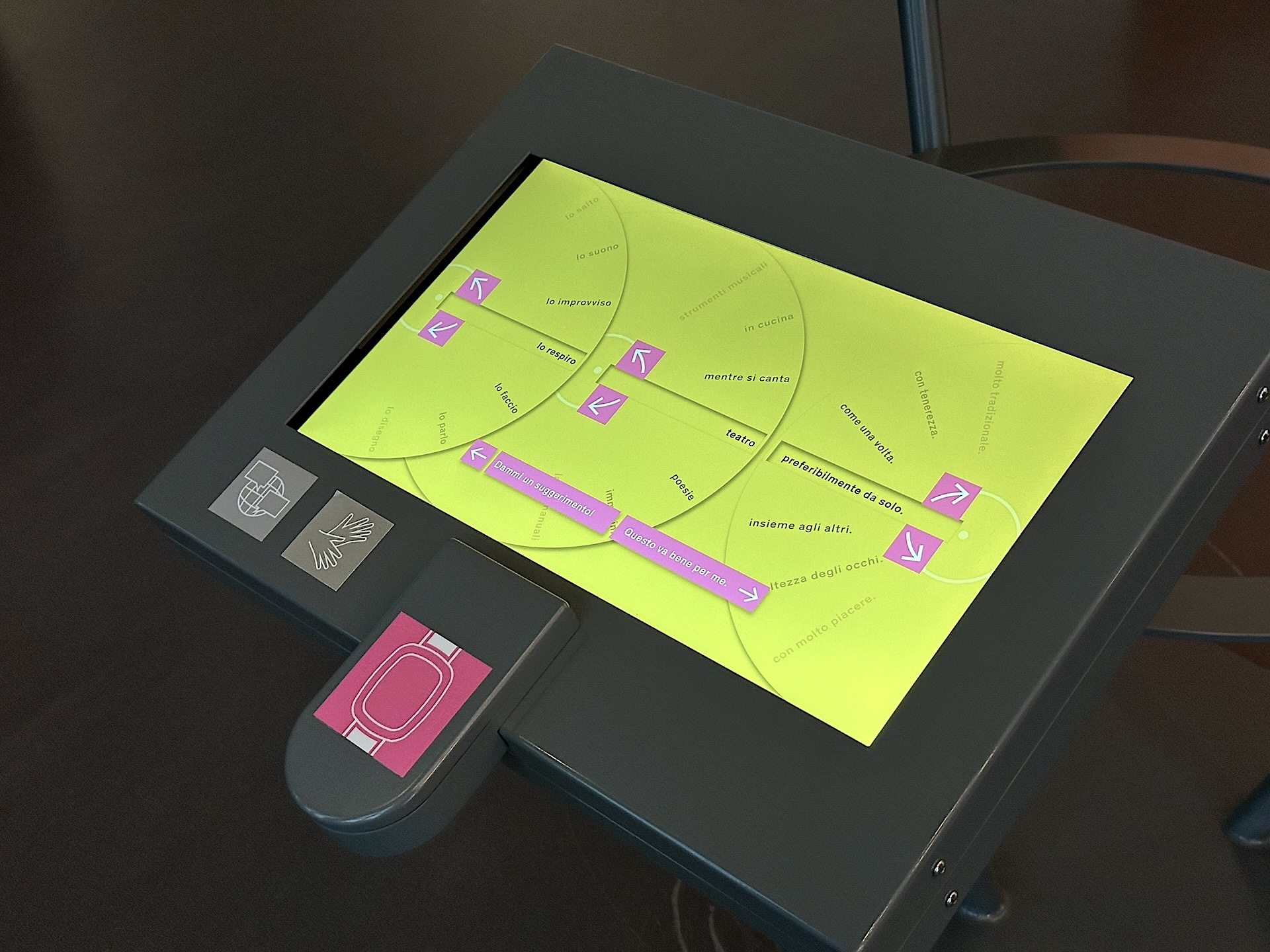
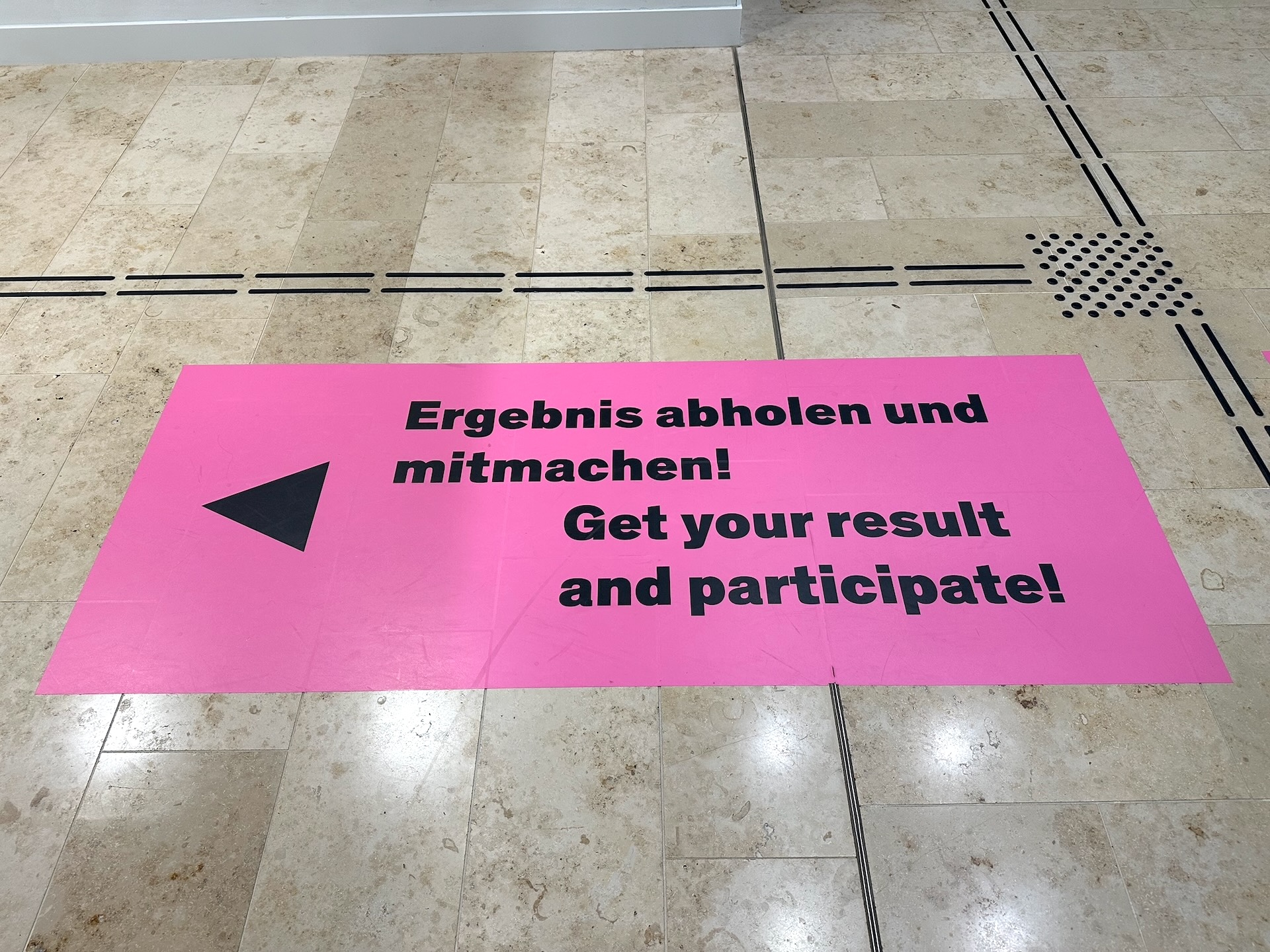
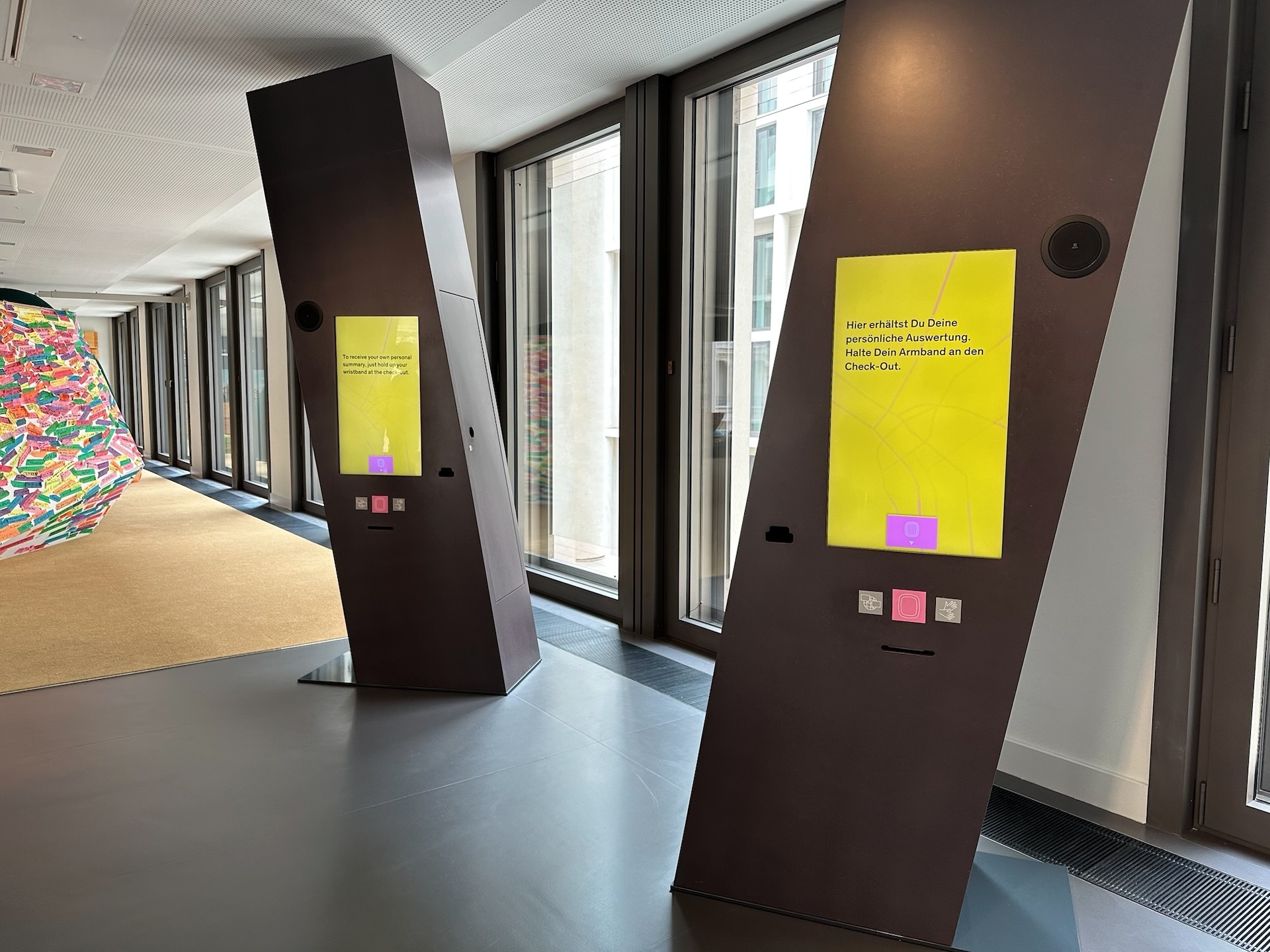
Berlin Global opened in 2021 and has been in continuous daily operation since — touched by visitors every day, cleaned every night, refreshed every week. The service, UX and UI system Luxoom built holds up across the range of stations, hardware and languages the exhibition runs on, and across the millions of visitors who have moved through it. What visitors experience as "the exhibition" is, from the design side, a lot of individual decisions about what stays, what goes, what belongs where, and how the visitor is always told — clearly and quickly — what they can do next.
Tell us about your project.
The first call is about understanding the question — not pitching the answer. Even if the brief is still loose.
hello@luxoom.com→