
Ai for Mobility Design
The companion project to the HVV mobility touchpoint shown at UITP 2025 — about how concept, prototype, design and industrialisation were compressed into a delivery window that wouldn't usually allow it.
HVV's next-generation mobility touchpoint had a fixed external deadline: UITP 2025, the global public transport summit, where the prototype needed to be on the ground. A standard process for a project of this scope — concept exploration through industrialisation, with accessibility, comfort and data integration as live parameters — wouldn't have fit the window. The brief was less about whether to use new tools and more about how to redesign the process itself so the deadline became achievable without dropping anything on the way.
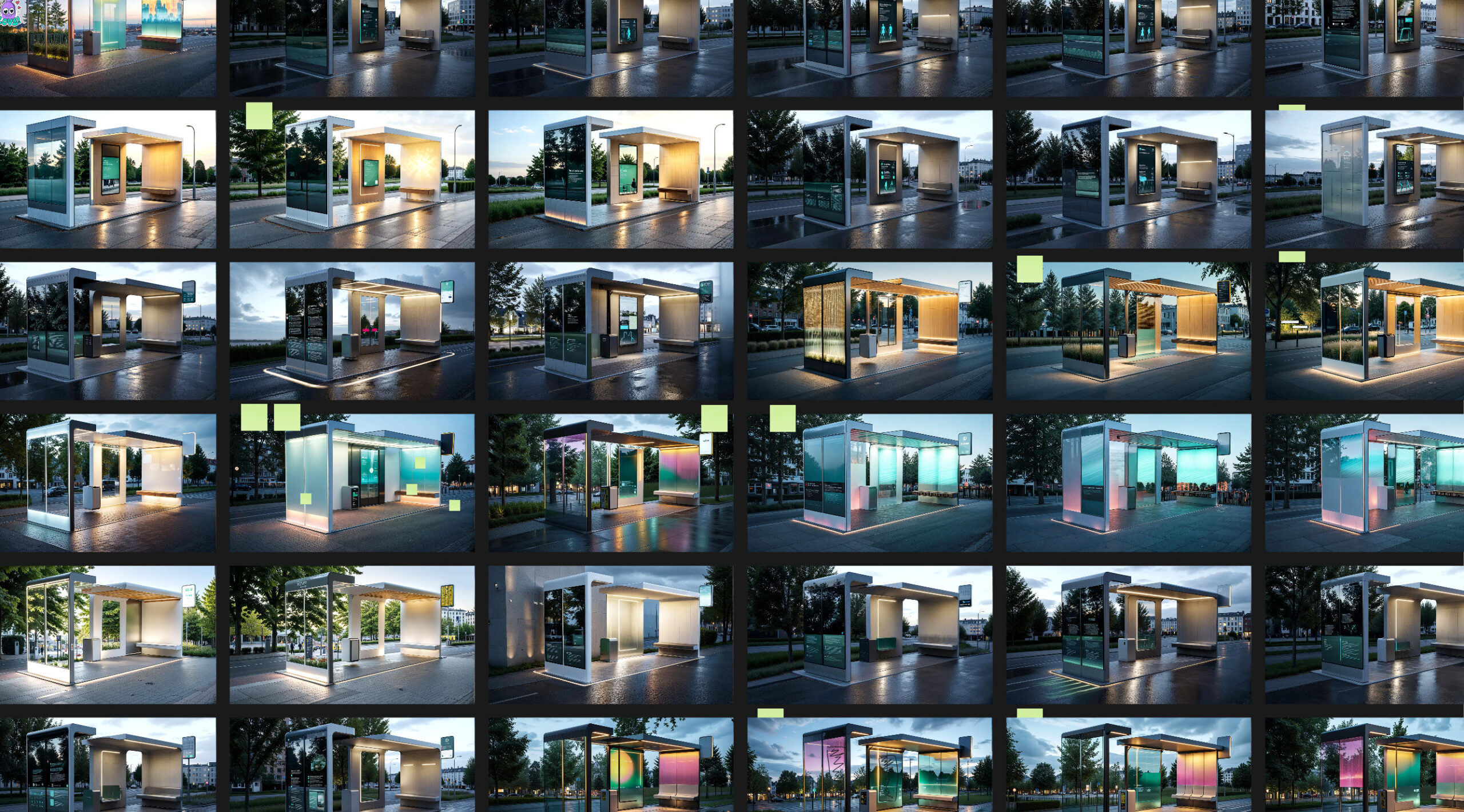
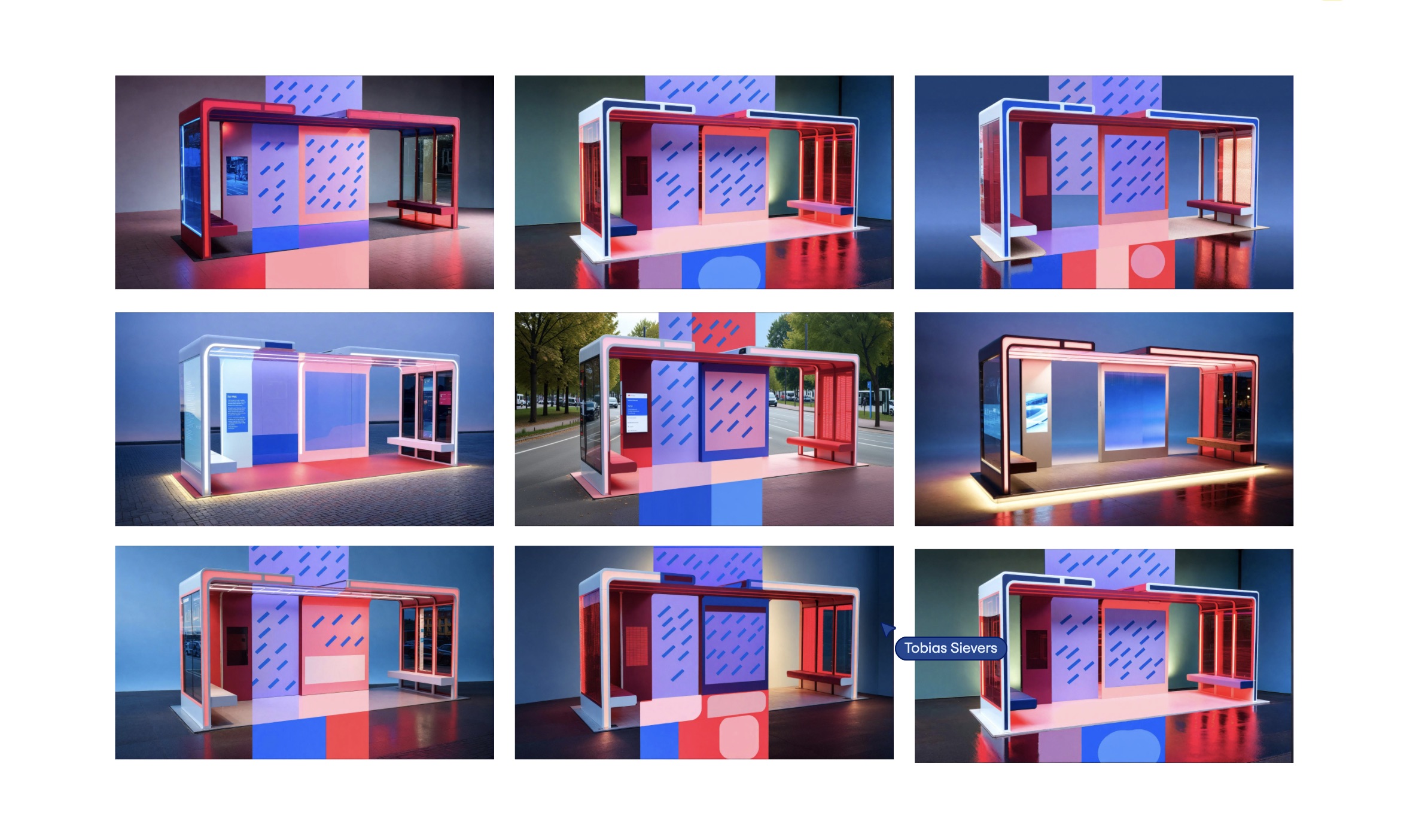
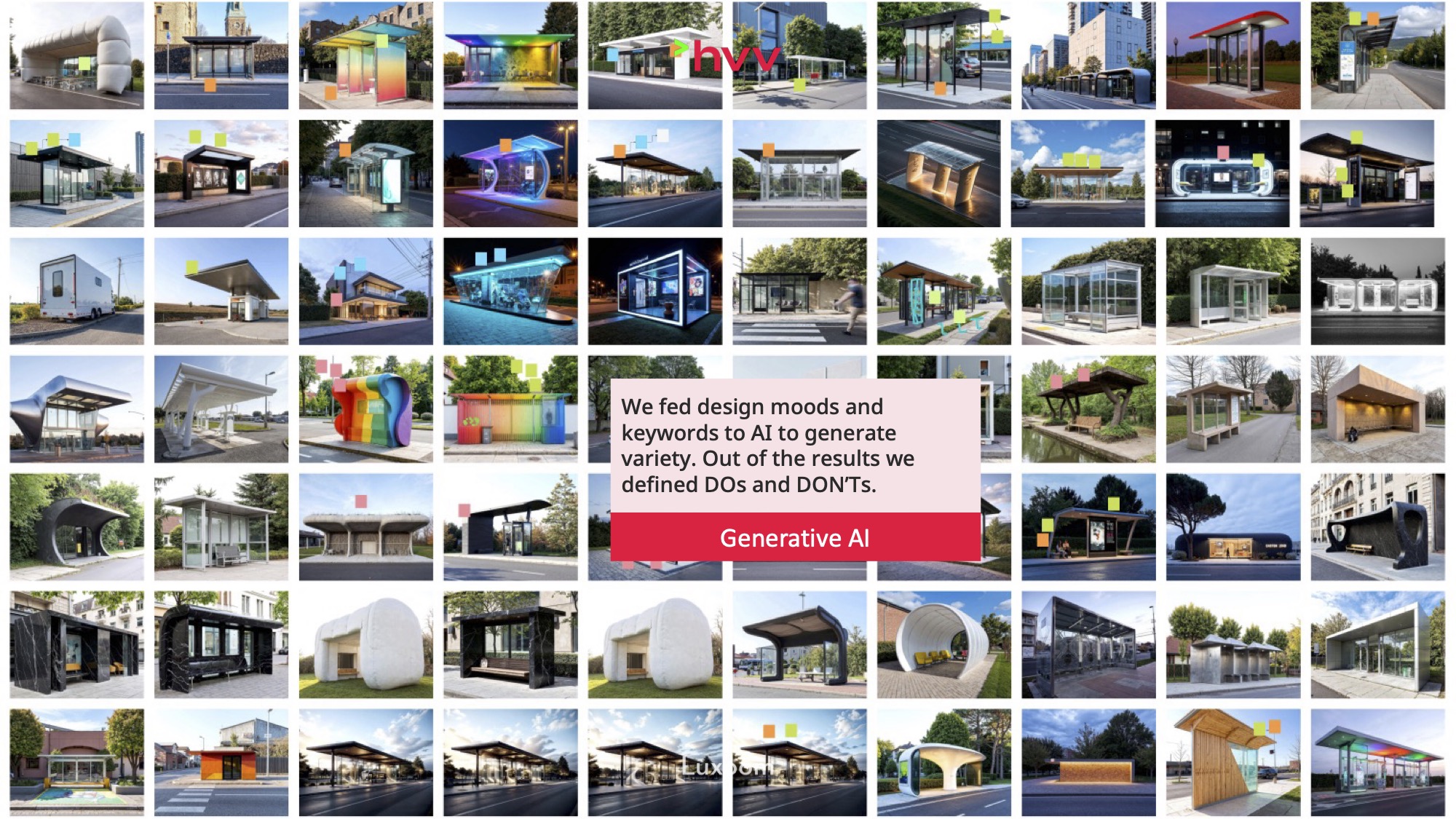
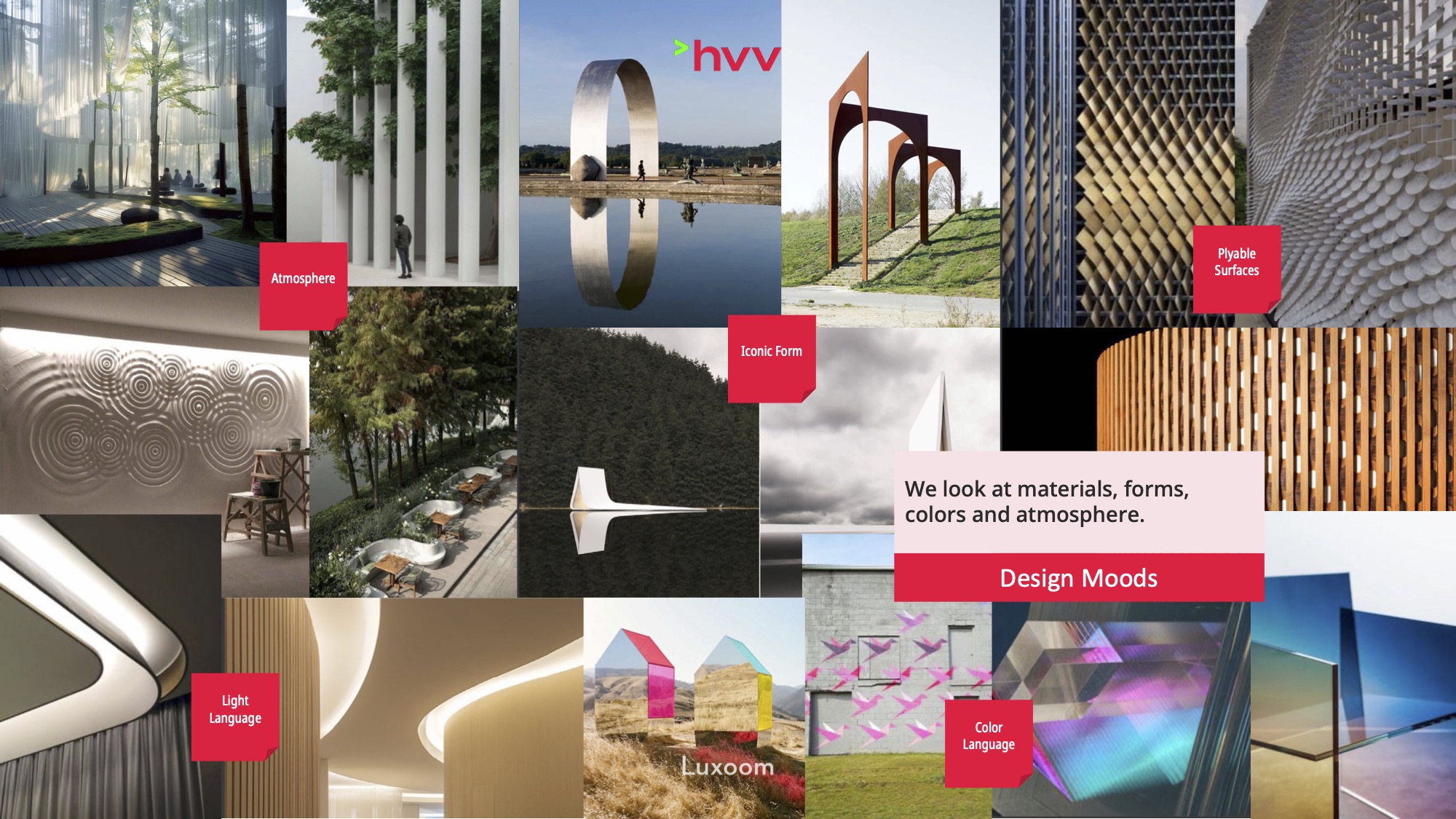
The decision was to make the early phase hybrid and parallel rather than sequential. Generative tools, 2D precise drawing and 3D modelling ran simultaneously, each feeding the others in continuous loops. Together with AI, the team explored on the order of 500 spatial and material configurations across a two-week window — circulation, visibility, modularity tested in parallel — while drawing and modelling refined the volumes and functions in tandem at the level of detail engineering would later need.
The point wasn't volume. 500 mediocre variants are no use to anyone. The point was that the explored space, the drawn space and the modelled space stayed in sync from day one. Conventionally these phases are stacked: concept first, then drawing, then 3D, then industrialisation. Stacking them creates handoff loss at every transition. Running them in parallel removed the handoffs, and the AI layer made the pace sustainable — pulling in detail at a rate that drawing and modelling alone couldn't have matched inside the deadline.
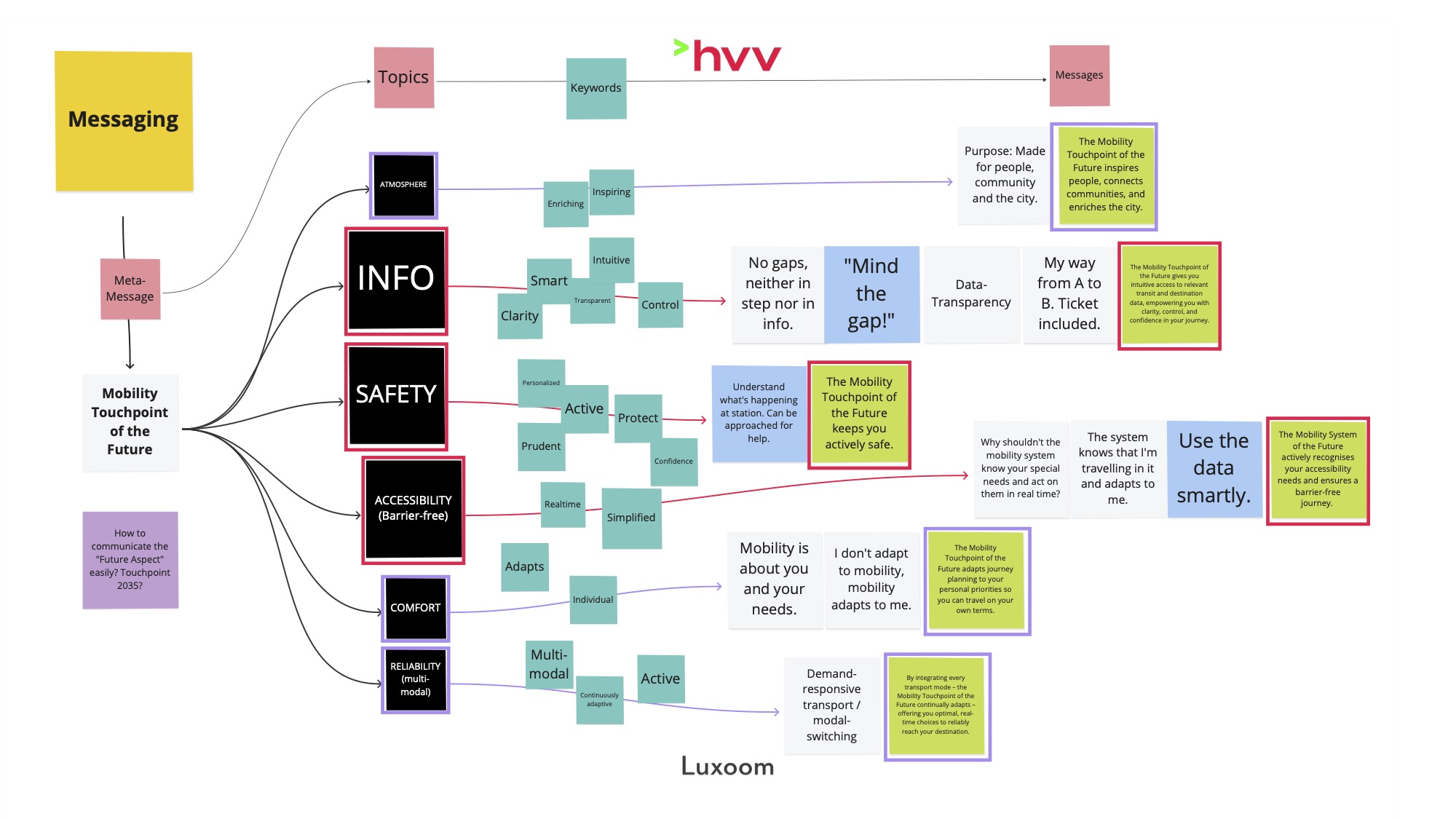
Modularity and deployment logic were built into the concept itself, not retrofitted in industrialisation — which is where most touchpoint projects lose their schedule. By the time engineering started, the deployment system was already implicit in the design. The tools sat under the process. Decisions stayed with the team; the generative layer accelerated iteration but didn't make selections. Where the workflow was new, the editorial standard wasn't — every variant taken forward was evaluated against the same questions a manual process would have asked, just faster.
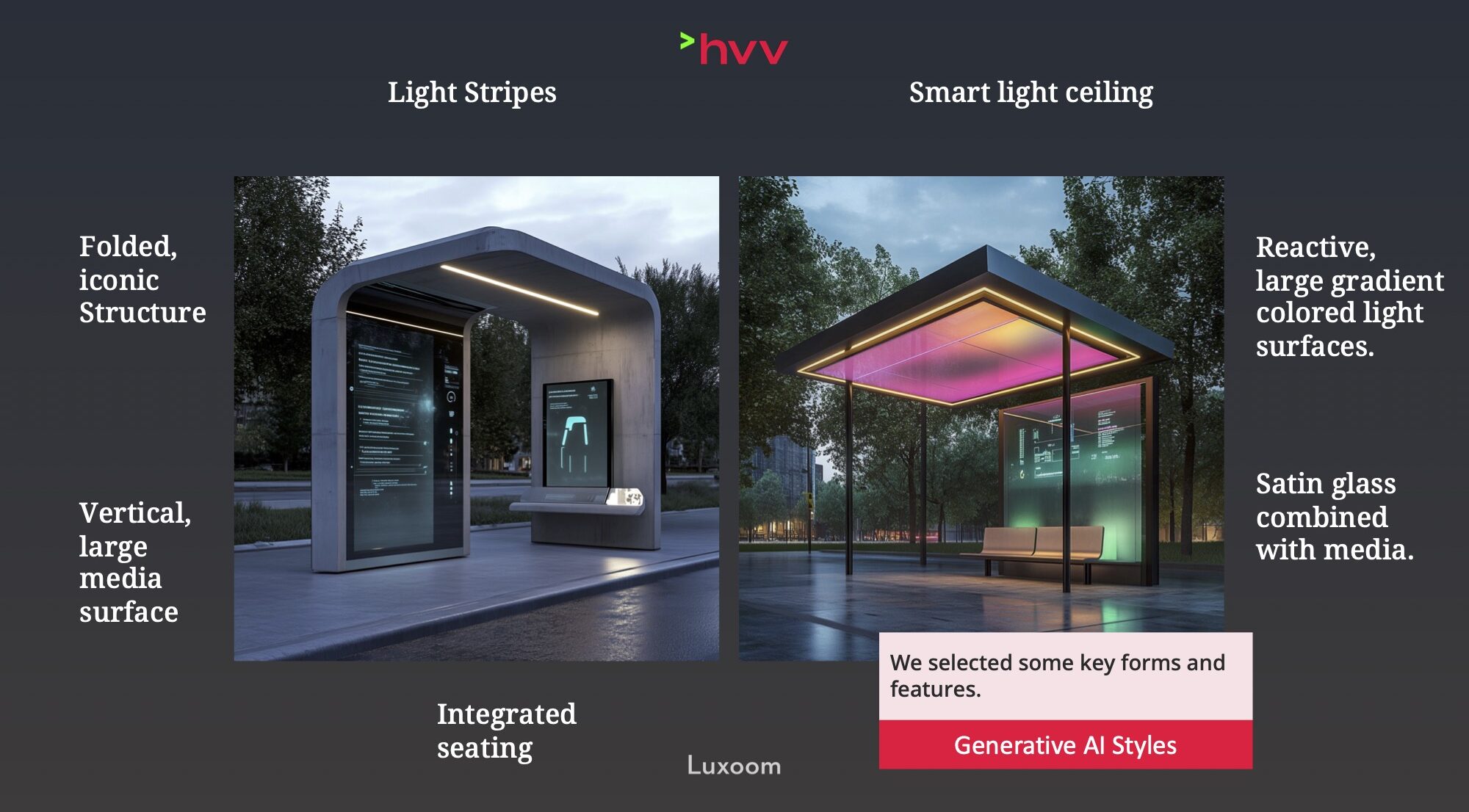
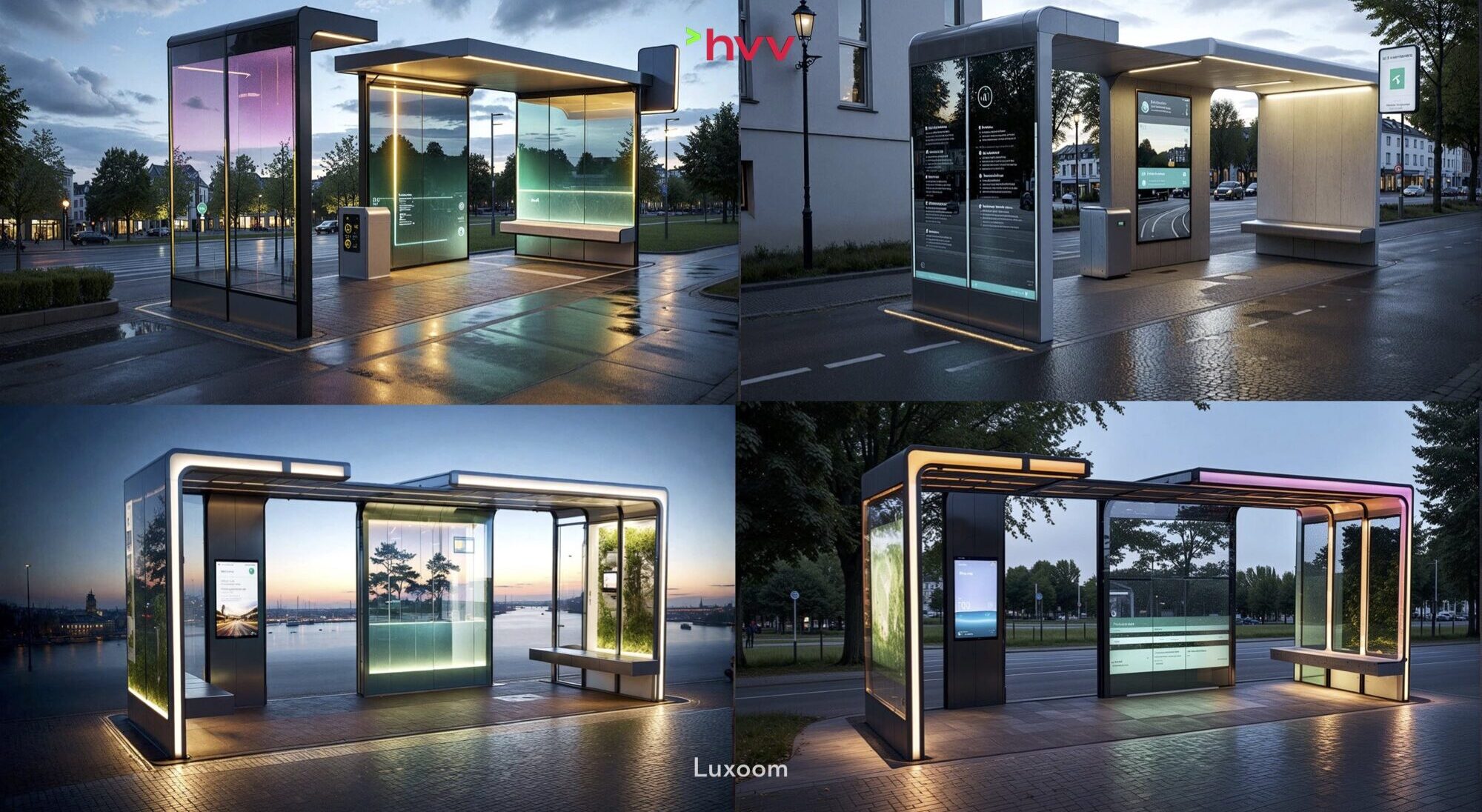
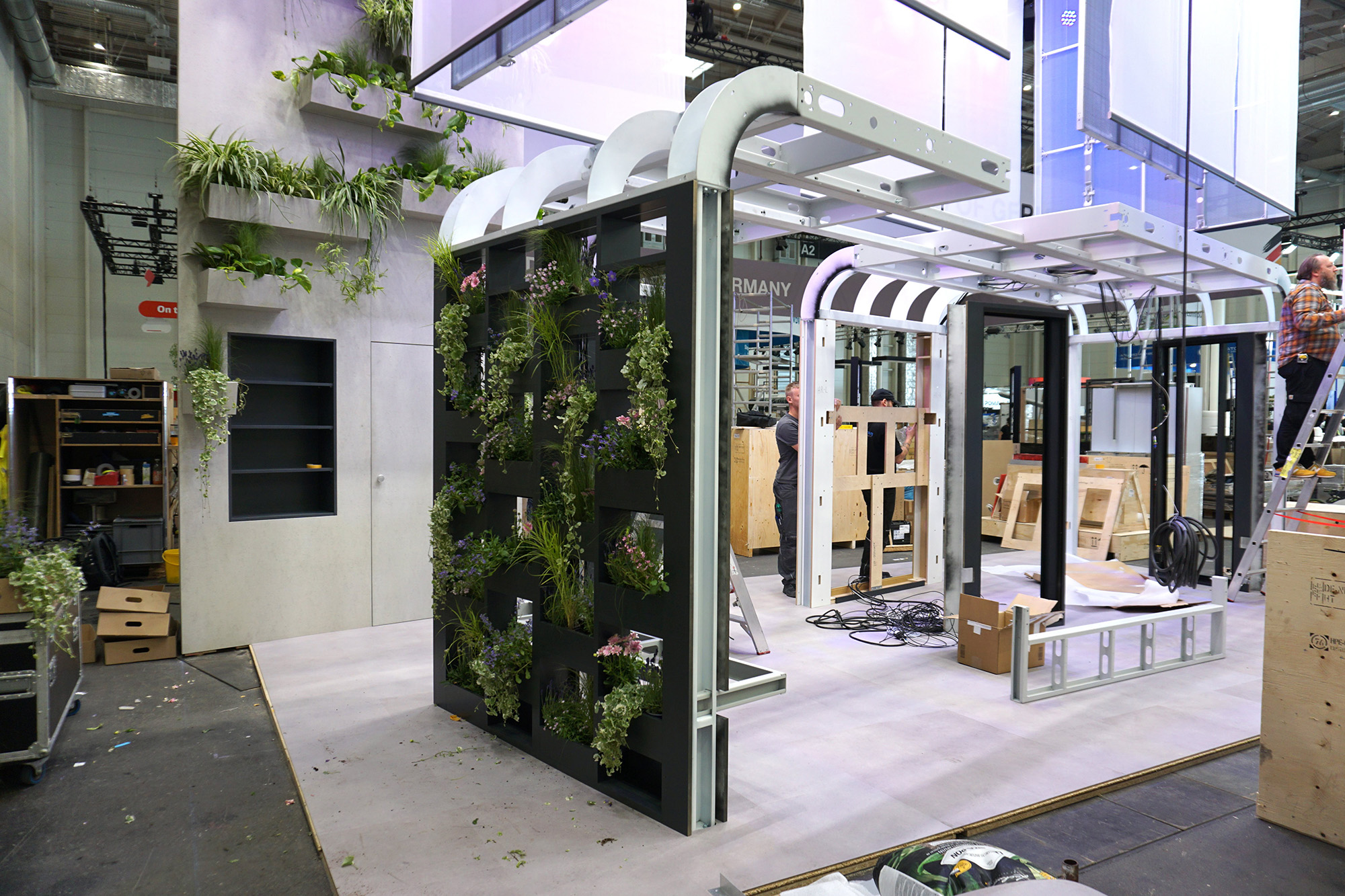
The touchpoint went live at UITP 2025 on the schedule the project was scoped to hit. Concept, prototype, design and industrialisation were delivered inside a window that would not typically accommodate all four. Because the explored, drawn and modelled spaces stayed in sync from the beginning, form, message and content arrived aligned — which is what made the client review fast, and the project recognisable to HVV from first look.
The workflow that made this possible is now a Luxoom capability, not a one-off response to one deadline. It carries into projects where the schedule and the scope wouldn't otherwise meet.
Tell us about your project.
The first call is about understanding the question — not pitching the answer. Even if the brief is still loose.
hello@luxoom.com→